Assignment 3 Final

When I was choosing my assignments for submission, I focused to select works which represents different aspects of the music. This assignment is focused on exploring musical instruments, specifically on the piccolo.

The Piccolo
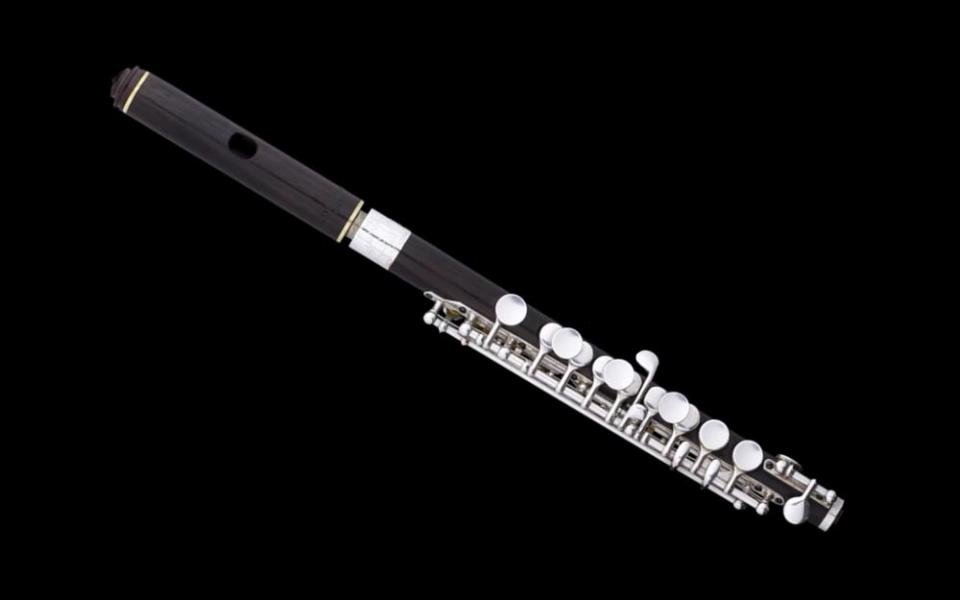
Piccolo (Piccolo, 2021)

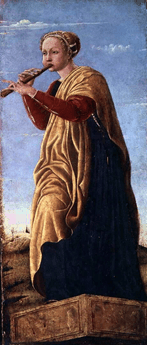
At the beginning of human history, the flute and the recorder were symbols of love spell, life, and rebirth for many primitive nations. Based on an old Greek mythology, we know that Zeus and Mnemosyne had nine daughters. Since ancient times we look at them as the muse of poetry, art and science. One of the daughters, Euterpe was the goddesses of music, song and dance. (Pécsi, 1998) As we can see on the picture below, the painter Francesco del Cassa portray Euterpe with a wind instrument.
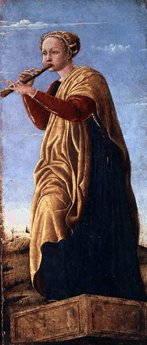
Francesco del Cassa: The Muse Euterpe (del Cossa, n.d.)

The piccolo is a member of the woodwind family of musical instruments. It is a small flute which sounds an octave higher than the ordinary or concert flute. (Oxfordmusiconline.com, 2019) The instrument made from wood, metal, or a combination of both.

During the nineteenth century, there was an industrial revolution which bought a social change as well as the development in science and manufacturing. This development had an effect on the design of the instruments and music performance. Auxiliary instruments such as the piccolo evolved and enhanced. It became a more frequent member of the orchestral wind section. (Rees, n.d.)

The piccolo evolved from the military transverse flute of the Middle Ages. From the 17th century to the 19th century there were rapid technical innovation in the flute making process which mirrored to the piccolo. The result of these technical improvements was a smaller sized piccolo traverso. By the early 18th century it appears with one to four keys and later more keys added. In the middle of the nineteenth century, piccolos were made using the new Boehm fingering mechanism invented by Theobald Boehm in 1832. Besides the development piccolos with older key mechanisms were still in use well into the twentieth century. The sound is produced the same way as on the flute. The musician blows through the mouth hole (embouchure hole) and the stream of air contacts the edge which cyclically directed outward and inward. This cyclically vibrating air stream is the sound generator and excites cyclic vibrations of the air column inside the flute’s cylindrical tube. The tone holes and keys shorten the vibrating air columns and produces an increase in pitch. The sound is projected through the open lower end and the open keys. The strength of blowing has an effect of pitch.

Blowing strongly results high pitch than blowing softly. The flutist’s lips also have an important role with intonation and expression. (Vsl.co.at, 2002)

The first time when parts appeared in scores for piccolo was in the first third of the eighteenth century. These parts appeared in the opera called Rinaldo (1711) and Water Music (1715) written by Georg Friedrich Handel. They also can be found in The Three Concerti per flautino composed by Antonio Vivaldi. The only problem that there was no clear indication which instrument plays these parts; the piccolo with one key or the high recorder or flageolet. Today this is not a problem as these parts are played by the piccolo.

The first composer who consciously wrote parts to the piccolo in his works was Ludwig van Beethoven. He used this instrument to imitate the sounds of the nature. For example, the whistling of a stormy wind in the fourth movement of his 6th Symphony. Other example is Giuseppe Verdi`s Rigoletto where the composer used a piccolo to symbolize lightning. And Wolfgang Amadeus Mozart`s Magic Flute where the instrument was used for special effects or compositions where the fortissimo of the piccolo is used to heighten terror in frightening scenes.

The Piccolo became a part of the Orchestra`s woodwind section by composers of the Romantic period especially Richard Strauss and Gustav Mahler. It became a widely used instrument to add colour and shading to the sound of the orchestra. Occasionally the piccolo also used as a solo instrument. (Vsl.co.at, 2002)

Beside the orchestral pieces there are other type of works composed for piccolo such as solos, concertos, chamber music and duets with piano which many of them are sonatas.

As the piccolo`s popularity increased, more and more flutists turned to this instrument. Beside playing in the Orchestra, the musicians turned to recording due to major improvement in the equipment such as Edison`s phonograph. Many virtuoso performers started recording their pieces which gained an international success. There were piccolo soloists all around the world.

Eli Hudson Rennison (1877-1919), was a sensational piccolo virtuoso and a pioneer recording artist in England. His skills and techniques were exceptional. The perfect intonation, clean articulation and brilliant passages made him an excellent piccolo player. After the Royal College of Music, he became a member of several orchestras such as the London Symphony Orchestra, Queen’s Hall Orchestra and the Crystal Palace Orchestra. In 1905 he was a co-founder of the New Symphony Orchestra which was the first orchestra that contracted with a gramophone company. Beside his orchestral play he was a regular soloist. For example, he played solo in the Bach’s Orchestral Suite No 2 in Prom 48 at the Queen’s Hall. He also explored other ways of working. He formed a trio with his wife and sister and started touring. They had several show pieces such as The Wren, Victoriana and The Sunshine of your smile which became a huge hit. They also did recordings together as a trio and individually as well. During his career he became famous not only as a flute and piccolo player but as a conductor, arranger, music hall star and recording artist. (Johnson, 2014)

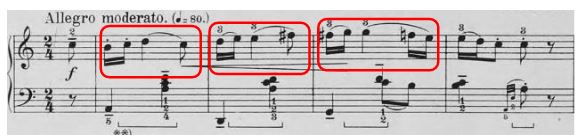
On the picture below is the sheet music of one of his solo piece Bonnisseau’s Scherzo which was recorded in 1908.
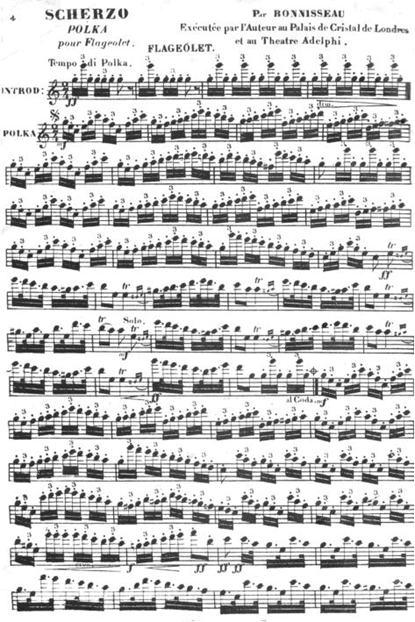
(Bigio, n.d.)

In Germany, Julius Aschke (c.1851), who was born in Berlin. At the beginning of his career he was a piccolo player in the Buchner Orchestra. In 1901 he moved to Philadelphia. Between 1904-1909 he recorded piccolo solos for the Gramophone company and for the Odeon in Berlin. (Scott, 2008)

Indian born Mark A. Brewer (1876), who was born in Poona. He went to England to study flute and piccolo under J Harrington Young. He was a member of the Covent Garden Orchestra and he also performed before Queen Victoria at Windsor in 1895. Beside playing he also composed solos for piccolo such as the Golden Sparks, The Comet, The Lark’s Festival, The Linnet’s Parade and Deep Blue Sea. (Scott, 2008)

In France, Eugène Damaré(1840-1919), who was born in Bayonne. He was a piccolo virtuoso, conductor and composer. He was an Officer of the French Academy. As a composer he wrote several pieces and also studies and methods for flute and piccolo. He recorded some of his works for Bellini. He was also played with Concert Arban and conducted the Hotel de Ville Festivals in Paris. (Scott, 2008)

In US, Henry Jaegerwho was a flute and piccolo soloist at the US Marine Band. He did recordings with the Columbia Phonograph Company. (Scott, 2008)

An Irish born, John S. Cox(1834-1902) who was a piccolo player and composer. He wrote a number of solo pieces. He was a member of the famous American Gilmores`s band and in 1892 he joined to another popular American band called Sousa. (Scott, 2008)

The 19th century industrial revolution introduced us to this unique instrument and since than it has a growing popularity between composers and talented players all around the world.

Word: 1219

Reference

Pécsi, G. (1998). Key to the music. 4th ed. Pécs: Key to the music Publisher, p.213.

del Cossa, F. (n.d.). The Muse Euterpe. [wood on canvas] Budapest, Hungary: Museum of Fine Arts.

Rees, C. (n.d.). From the Present to the Past.

Oxfordmusiconline.com. (2019). Piccolo | Grove Music. [online] Available at: https://www.oxfordmusiconline.com/grovemusic/view/10.1093/gmo/9781561592630.001.0001/omo-9781561592630-e-0000021679?rskey=W9iCNk [Accessed 8 January 2020]

Vsl.co.at. (2002). Sound Production – Vienna Symphonic Library. [online] Available at: https://www.vsl.co.at/en/Piccolo/Sound_Production [Accessed 15 Jan. 2020]

Vsl.co.at. (2002). History – Vienna Symphonic Library. [online] Available at: https://www.vsl.co.at/en/Piccolo/History [Accessed 16 Jan. 2020]

Johnson, J. (2014). London Symphony Orchestra – The LSO in World War I: Eli Hudson. [online] Lso.co.uk. Available at: https://lso.co.uk/more/blog/306-the-lso-in-world-war-i-eli-hudson.html [Accessed 18 Jan. 2020]

Bigio, R. (n.d.). Eli Hudson recordings. [online] Robertbigio.com. Available at: http://robertbigio.com/hudson.htm [Accessed 20 Jan. 2020]

Scott, S. (2008). The Piccolo Soloists. [online] Dwsolo.com. Available at: https://www.dwsolo.com/flutehistory/piccolo/The%20Piccolo%20Soloists.htm [Accessed 22 Jan. 2020]

Cover picture: 2021. Piccolo. [image] Available at: <https://philharmonia.co.uk/resources/instruments/piccolo/&gt; [Accessed 4 February 2020]

Reflective Account

This reflective account gives a detail how I was working on part three.

The biggest challenge for me with this chapter was to focus on my work. I had a difficult few months, which made my studies difficult, but I took my time and approach the material step by step.

My learning began with the nineteenth century industrial revolution and as a result the improvement of the instruments. Although I had a historical knowledge about the revolution itself, this topic gave me a deeper understanding about the development of the instruments and how they used them.

My next journey was the romantic music. This genre was always close to me. As a singer I really enjoy performing pieces from this period because they are filled with lots of emotional expressions for example Faure Le Secret or Bellini Ma rendi pur contento etc. The unfamiliar area within the romantic period was the programme music. Berlioz and Mahler names were not new, but I never listened pieces from them before. The exercise also helped me to approach music and listening on a different way. It was also an enjoyment to came across Bartok`s name in the chapter of nationalism in music. He was a really important composer in Hungary. Bartok worked with Kodaly and they were pioneers for collecting Hungarian folk music and using folk elements in their compositions. This chapter gave me a vide view about other composers around the world who did similar works.

I had the same experience with piano recital. Although piano is not my favourite instrument and I do not really enjoy solo piano pieces it is undeniable, that Franz Liszt was pioneer with his composition and solo performances. It was really interesting to read about different music styles and how they performed. It surprised me that chamber music was only popular with different instrumental settings, as personally I like to listen piano based ensembles and solo voices which accompanied with piano as well as string quartets.

The last chapter from Wagner was an interesting topic. As the composer is famous amongst singers. His opera arias are highly demanding for singers and orchestra players as well. For a singer the vocals require different level of singing style and technique. You need a really dramatic voice to bring alive what Wagner wanted when he wrote his pieces.

In terms of my working methods, I really enjoyed the listening part and the research. I feel I am getting more comfortable about music. This was the first time I had to write a short account instead of an essay which was new and I hope I got the right idea about the form. I try to widen my research sources and I am using books, lectures and internet for my works. Although I feel I am improving about writing, I still need to focus on this area to achieve the requirements for the assignments and blogs. For that I try to gain more knowledge about forms and modes of communicating musical information. I also need to focus on more of my time management. I made sure that my referencing is correct.

Word: 521

Reflection on Tutor Feedback for Assignment Three

I was happy with my tutor`s feedback, although I knew there is plenty of room to improve. The first issue was the opening paragraph of the essay. As my tutor suggested, I changed the order of some points to help the flow of the content.

My biggest mistake was that I did not write a conclusion, so I added this section when I was re-visited my work.  

I had a mistake in my reference list as well. I forgot to translate the reference of the Hungarian book I used for the essay. I corrected this by giving the reference in English.

Another issue was my listening log. My tutor made me aware that I only used one source. I corrected this by using multiple sources to improve my critical engagement and research skills.

Overall, when I was re-visiting my assignment, I followed my tutor`s advice. I focused on the structure and flow of my academic writing and wrote a clearer “narrative” and logical structure. During the research, I used a variety of sources. I also worked on my listening log and added more entries and works.

Assignment 3

The Piccolo

Based on an old Greek mythology, we know that Zeus and Mnemosyne had nine daughters. Since ancient times we look at them as the muse of poetry, art and science. One of the daughters, Euterpe was the goddesses of music, song and dance. (Pécsi, 1998) As we can see on the picture below, the painter Francesco del Cassa portray Euterpe with a wind instrument.
Francesco del Cassa: The Muse Euterpe (del Cossa, n.d.)

At the beginning of human history, the flute and the recorder were symbols of love spell, life and rebirth for many primitive nations. During the nineteenth century, there was an industrial revolution which bought a social change as well as the development in science and manufacturing. This development had an effect on the design of the instruments and music performance. Auxiliary instruments such as the piccolo evolved and enhanced. It became a more frequent member of the orchestral wind section. (Rees, n.d.)

The piccolo is a member of the woodwind family of musical instruments. It is a small flute which sounds an octave higher than the ordinary or concert flute. (Oxfordmusiconline.com, 2019) The instrument made from wood, metal or a combination of both.

The sound is produced the same way as on the flute. The musician blows through the mouth hole (embouchure hole) and the stream of air contacts the edge which cyclically directed outward and inward. This cyclically vibrating air stream is the sound generator and excites cyclic vibrations of the air column inside the flute’s cylindrical tube. The tone holes and keys shorten the vibrating air columns and produces an increase in pitch. The sound is projected through the open lower end and the open keys. The strength of blowing has an effect of pitch. Blowing strongly results high pitch than blowing softly. The flutist’s lips also have an important role with intonation and expression. (Vsl.co.at, 2002) The piccolo evolved from the military transverse flute of the Middle Ages. From the 17th century to the 19th century there were rapid technical innovation in the flute making process which mirrored to the piccolo. The result of these technical improvements was a smaller sized piccolo traverso. By the early 18th century it appears with one to four keys and later more keys added. In the middle of the nineteenth century, piccolos were made using the new

Boehm fingering mechanism invented by Theobald Boehm in 1832. Besides the development piccolos with older key mechanisms were still in use well into the twentieth century.

The first time when parts appeared in scores for piccolo was in the first third of the eighteenth century. These parts appeared in the opera called Rinaldo (1711) and Water Music (1715) written by Georg Friedrich Handel. They also can be found in The Three Concerti per flautino composed by Antonio Vivaldi. The only problem that there was no clear indication which instrument plays these parts; the piccolo with one key or the high recorder or flageolet. Today this is not a problem as these parts are played by the piccolo.

The first composer who consciously wrote parts to the piccolo in his works was Ludwig van Beethoven. He used this instrument to imitate the sounds of the nature. For example, the whistling of a stormy wind in the fourth movement of his 6th Symphony. Other example is Giuseppe Verdi`s Rigoletto where the composer used a piccolo to symbolize lightning. And Wolfgang Amadeus Mozart`s Magic Flute where the instrument was used for special effects or compositions where the fortissimoof the piccolo is used to heighten terror in frightening scenes.

The Piccolo became a part of the Orchestra`s woodwind section by composers of the Romantic period especially Richard Strauss and Gustav Mahler. It became a widely used instrument to add colour and shading to the sound of the orchestra. Occasionally the piccolo also used as a solo instrument. (Vsl.co.at, 2002)

Beside the orchestral pieces there are other type of works composed for piccolo such as solos, concertos, chamber music and duets with piano which many of them are sonatas.

As the piccolo`s popularity increased, more and more flutists turned to this instrument. Beside playing in the Orchestra, the musicians turned to recording due to major improvement in the equipment such as Edison`s phonograph. Many virtuoso performers started recording their pieces which gained an international success. There were piccolo soloists all around the world.

In England, Eli Hudson Rennison (1877-1919), who was sensational piccolo virtuoso and a pioneer recording artist in England. His skills and techniques were exceptional. The perfect intonation, clean articulation and brilliant passages made him an excellent piccolo player. After the Royal College of Music, he became a member of several orchestras such as the London Symphony Orchestra, Queen’s Hall Orchestra and the Crystal Palace Orchestra. In 1905 he was a co-founder of the New Symphony Orchestra which was the first orchestra that contracted with a gramophone company. Beside his orchestral play he was a regular soloist. For example, he played solo in the Bach’s Orchestral Suite No 2 in Prom 48 at the Queen’s Hall. He also explored other ways of working. He formed a trio with his wife and sister and started touring. They had several show pieces such as The Wren, Victoriana and The Sunshine of your smile which became a huge hit. They also did recordings together as a trio and individually as well. During his career he became famous not only as a flute and piccolo player but as a conductor, arranger, music hall star and recording artist. (Johnson, 2014) On the picture below is the sheet music of one of his solo piece Bonnisseau’s Scherzo which was recorded in 1908.
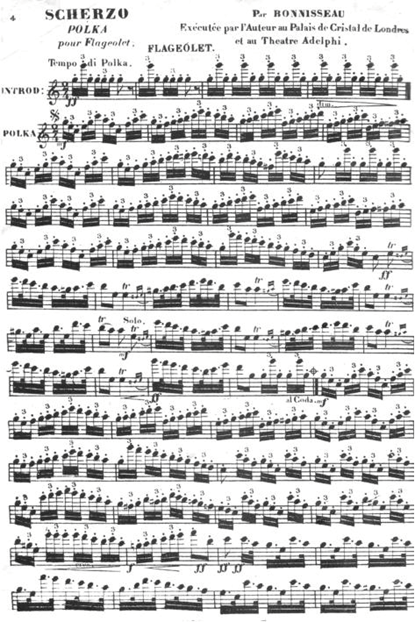
(Bigio, n.d.)

In Germany, Julius Aschke (c.1851), who was born in Berlin. At the beginning of his career he was a piccolo player in the Buchner Orchestra. In 1901 he moved to Philadelphia. Between 1904-1909 he recorded piccolo solos for the Gramophone company and for the Odeon in Berlin. (Scott, 2008)

Indian born Mark A. Brewer (1876), who was born in Poona. He went to England to study flute and piccolo under J Harrington Young. He was a member of the Covent Garden Orchestra and he also performed before Queen Victoria at Windsor in 1895. Beside playing he also composed solos for piccolo such as the Golden Sparks, The Comet, The Lark’s Festival, The Linnet’s Parade and Deep Blue Sea. (Scott, 2008) In France, Eugène Damaré (1840-1919), who was born in Bayonne. He was a piccolo virtuoso, conductor and composer. He was an Officer of the French Academy. As a composer he wrote several pieces and also studies and methods for flute and piccolo. He recorded some of his works for Bellini. He was also played with Concert Arban and conducted the Hotel de Ville Festivals in Paris. (Scott, 2008)

In US, Henry Jaeger who was a flute and piccolo soloist at the US Marine Band. He did recordings with the Columbia Phonograph Company and he was the first musician who was identified by name. (Scott, 2008)

An Irish born, John S. Cox (1834-1902) who was a piccolo player and composer. He wrote a number of solo pieces. He was a member of the famous American Gilmores`s band and in 1892 he joined to another popular American band called Sousa. (Scott, 2008)

Reference

Pécsi, G. (1998). Kulcs a muzsikához. 4th ed. Pécs: Kulcs a muzsikához Kiadó, p.213.

del Cossa, F. (n.d.). The Muse Euterpe. [wood on canvas] Budapest, Hungary: Museum of Fine Arts.

Rees, C. (n.d.). From the Present to the Past

Oxfordmusiconline.com. (2019). Piccolo | Grove Music. [online] Available at: https://www.oxfordmusiconline.com/grovemusic/view/10.1093/gmo/9781561592630.001.0001/omo-9781561592630-e-0000021679?rskey=W9iCNk [Accessed 8 January 2020]

Vsl.co.at. (2002). Sound Production – Vienna Symphonic Library. [online] Available at: https://www.vsl.co.at/en/Piccolo/Sound_Production [Accessed 15 Jan. 2020].

Vsl.co.at. (2002). History – Vienna Symphonic Library. [online] Available at: https://www.vsl.co.at/en/Piccolo/History [Accessed 16 Jan. 2020]

Johnson, J. (2014). London Symphony Orchestra – The LSO in World War I: Eli Hudson. [online] Lso.co.uk. Available at: https://lso.co.uk/more/blog/306-the-lso-in-world-war-i-eli-hudson.html [Accessed 18 Jan. 2020]

Bigio, R. (n.d.). Eli Hudson recordings. [online] Robertbigio.com. Available at: http://robertbigio.com/hudson.htm [Accessed 20 Jan. 2020]

Scott, S. (2008). The Piccolo Soloists. [online] Dwsolo.com. Available at: https://www.dwsolo.com/flutehistory/piccolo/The%20Piccolo%20Soloists.htm [Accessed 22 Jan. 2020]

Reflective Account

This reflective account gives a detail how I was working on part three.

The biggest challenge for me with this chapter was to focus on my work. I had a difficult few months, which made my studies difficult, but I took my time and approach the material step by step.

My learning began with the nineteenth century industrial revolution and as a result the improvement of the instruments. Although I had a historical knowledge about the revolution itself, this topic gave me a deeper understanding about the development of the instruments and how they used them.

My next journey was the romantic music. This genre was always close to me. As a singer I really enjoy performing pieces from this period because they are filled with lots of emotional expressions for example Faure Le Secret or Bellini Ma rendi pur contento etc. The unfamiliar area within the romantic period was the programme music. Berlioz and Mahler names were not new, but I never listened pieces from them before. The exercise also helped me to approach music and listening on a different way. It was also an enjoyment to came across Bartok`s name in the chapter of nationalism in music. He was a really important composer in Hungary. Bartok worked with Kodaly and they were pioneers for collecting Hungarian folk music and using folk elements in their compositions. This chapter gave me a vide view about other composers around the world who did similar works.

I had the same experience with piano recital. Although piano is not my favourite instrument and I do not really enjoy solo piano pieces it is undeniable, that Franz Liszt was pioneer with his composition and solo performances. It was really interesting to read about different music styles and how they performed. It surprised me that chamber music was only popular with different instrumental settings, as personally I like to listen piano based ensembles and solo voices which accompanied with piano as well as string quartets.

The last chapter from Wagner was an interesting topic. As the composer is famous amongst singers. His opera arias are highly demanding for singers and orchestra players as well. For a singer the vocals require different level of singing style and technique. You need a really dramatic voice to bring alive what Wagner wanted when he wrote his pieces.

In terms of my working methods, I really enjoyed the listening part and the research. I feel I am getting more comfortable about music. This was the first time I had to write a short account instead of an essay which was new and I hope I got the right idea about the form. I try to widen my research sources and I am using books, lectures and internet for my works. Although I feel I am improving about writing, I still need to focus on this area to achieve the requirements for the assignments and blogs. For that I try to gain more knowledge about forms and modes of communicating musical information. I also need to focus on more of my time management. I made sure that my referencing is correct.

Tutor report
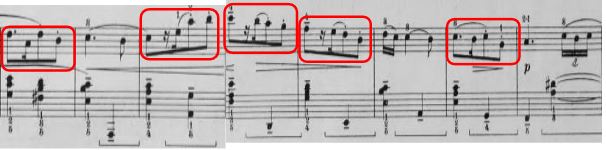
Exercise: The folk tradition

Bújj, bújj zöld ág (Hegyi, 2021)

Bújj, bújj, zold ág is a Hungarian folk song which based on folk traditions. My earliest memory of this song is from my childhood. My parents and other family members sang for me. Later I also introduced to this song when I attended to playschool. The teachers used this tune to teach music rhythm and memorizing songs. As I grow up, I taught this piece first to my cousins’ children than when I was trained as a teacher. Thankfully, this folk song is a base of the Hungarian music education, so I do not think it will die out.

Folk songs generally have a simple text and form, and they are associated with the lives of people. They are also often having a socially significant message. Traditionally they are passed between people through an oral tradition but there is musicologists like Kodály and Bartók who collected and recorded these folk songs. A folk song can be associated with a particular political or social movement, for example Ha én rózsa volnék. This song written by János Bródy and sang by Zsuzsa Koncz. The lyrics were embedding the possibility of multiple interpretations but in reality, it was criticizing the communist regime. This song with other similar pieces became so popular, that they turned the increasingly crowded events to implicit protests.

Bújj, bújj, zold ág has a short melody and contains 14 bars. The song has two phrases with a repeated section in the second part from bar 9-12.

Bújj,bújj,zöld ág,

Zöld levelecske…

Nyitva van az aranykapu,

Csak bújjatok rajta.

Rajta, rajta

Leszakadt a pajta,

Benn maradt a macska.

Reference

Hegyi, M., 2021. Bújj, bújj zöld ág (Gyerekdalok és mondókák, rajzfilm gyerekeknek). Available at: <https://www.youtube.com/watch?v=7hO9K5xdmYo&gt; [Accessed 5 February 2021].

Bródy, J., n.d. életút. [online] Brody.mediastorm.hu. Available at: <http://brody.mediastorm.hu/elet.htm&gt; [Accessed 5 February 2021].

Exercise: Expressing national identity Part 2

Ralph Vaughan Williams – English Folksong Suite

Ralph Vaughan Williams – English Folksong Suite (Williams, 2021)

When considering appropriate aspects of “Englishness” to be reflected in a choice of idiomatic English music, I settled on folk tunes and the piece called English Folksong Suite written by Ralph Vaughan Williams.

The composer not only appreciated British landscapes and heritage, but he was also sentimental about Britain`s musical history.  In 1923 Ralph Vaughan Williams composed the English Folk Song Suite for wind orchestra. It consists of three movements which based on main British folk songs from the Norfolk and Somerset regions of England. These folk songs bring different stories and emotions.

He first movement is an English march, and it contains three folk songs; Seventeen Come Sunday (played by the woodwinds and strings), Pretty Caroline (solo clarinet), and Dives and Lazarus (lower instruments). The first two folk songs are about military men falling in love with and marrying, beautiful women. The mood of the two songs is creating a contrast. The first is bouncy and jovial while the second is legato and cantabile. Also, the irregular phrasing of the melody adds to the syncopated quirkiness of the march. The third folk song of this movement is Dives and Lazarus. The story of this tune is Lazarus repeatedly begs Dives, a rich man, for food but is denied. To portray the antagonism of the event, the composer set a firm duple meter melody in the low brass against a rigorous triple meter accompaniment in upper winds.

The second movement is an Intermezzo and begins with My Bonnie Boy (solo oboe). The melody interrupted by Green Bushes which is more upbeat and dance-like than the slow, emotional opening. Both folk songs deal with love betrayed. My Bonny Boy is set in the F dorian mode, which features the folk roots in the music. The mood shifts slightly to the folk song Green Bushes which is in a playful scherzando style.

The third movement uses four different folk songs dealing loosely with unattainable love. First folk song is Blow Away the Morning Dew (clarinet solo) describes a country boy attempting to seduce a girl who quickly outwits him. Second folk song is High Germany (led by lower instruments) and it is about a young English woman’s lover and her three brothers being called off to war in Germany. Third folk song is a modified version of The Trees They Do Grow High, and it brings the story of a young woman who has been wed by her father to a much younger boy. The final folk song is John Barleycorn which is an allegory representing the harvesting and cultivation of barley.

Reference

Williams, R., 2021. English Folk Song Suite. Available at: <https://www.youtube.com/watch?v=D0sC4xbyT5c&gt; [Accessed 5 February 2021]

Encyclopedia Britannica. 2021. Ralph Vaughan Williams | British composer. [online] Available at: <https://www.britannica.com/biography/Ralph-Vaughan-Williams&gt; [Accessed 5 February 2021]

Williams, R., 2021. English Folk Song Suite (Vaughan Williams, Ralph) – IMSLP: Free Sheet Music PDF Download. [online] Imslp.org. Available at: <https://imslp.org/wiki/English_Folk_Song_Suite_(Vaughan_Williams%2C_Ralph)&gt; [Accessed 5 February 2021]

Exercise: Expressing national identity

Béla Bartók – Romanian Folk Dances

(Bartok, 2017)

In this work Bartók used seven original folk tunes which he collected from different regions of Transylvania. Each piece represents a different dance form.

Joc cu Bâtă (Stick Dance) is the first piece from the set. The national identity come across by the folkloric elements. The first element is the key of the piece. It centered around A with influences of Dorian and Aeolian modes which are the most used modes in Romanian folk music.

The second element is the melody which represents a typical Romanian folkloric dance type. For example, the use of the dotted rhythms (Example 1) which reflect a dynamic dance or the sequential rhythmic material which spread over a full measure and gives us a slow folkloric dance type (Example 2).

Example 1. Bela Bartok Romanian Folk Dances Sz. 56, Stick Dance mm.1-4. (Bartok, 2021)
Example 2. Bela Bartok Romanian Folk Dances Sz. 56, Stick Dance, mm. 18-25. (Bartok, 2021)

The third element is the variations and ornamentation which respecting the idea of free improvisation and variation on a theme. Free improvisation is the foundation of the Romanian folk tunes.  (Example 3)

Example 3. Bela Bartok Romanian Folk Dances Sz. 56, Stick Dance, mm. 16-17. (Bartok, 2021)

Reference

Bartok, B., 2017. Béla Bartók plays his Romanian Folk Dances No. 1, 2 & 6. [online] Youtube.com. Available at: <https://www.youtube.com/watch?v=DscctOyPzh8&gt; [Accessed 5 February 2021].

Bartok, B., 2021. Romanian Folk Dances, Sz.56 (Bartók, Béla) – IMSLP: Free Sheet Music PDF Download. [online] Imslp.org. Available at: <https://imslp.org/wiki/Romanian_Folk_Dances%2C_Sz.56_(Bart%C3%B3k%2C_B%C3%A9la)&gt; [Accessed 5 February 2021].

Research Point: Wagner, Anti-Semitism and Nazism

Richard Wagner - Wikipedia
Richard Wagner (Richard Wagner, 2021)

Wilhelm Richard Wagner (1813-1883) was a German dramatic composer and theorist whose operas and music had a revolutionary influence on the Western music. (Cooke, 2020)

Wagner lived during an era of widespread anger towards Jews in Europe because their economic liberalism. The 1873 stock market crash and agricultural crisis further deepened this anger, so it is not surprising that many Germans showed antagonism. Wagner himself blamed the Jews for the materialism and reactionary values that occupy Europe`s spiritual development. But he was not the only composer who shared this view against Jews. Chopin, Liszt, and Mussorgsky are also made comments that could be regarded as anti-Semitic. Wagner became involved with the underground nationalist movement, and with the idea of social regeneration, he joined to the German revolution between 1848-49. He wrote a number of articles advocating revolution and he also took part in the Dresden uprising of 1849. After all of this, it is not unusual that his dramatic works would contain anti-Semitic thoughts.

In 1850, he wrote an essay the Das Judentum in der Musik (Judaism in Music), in which he stated that Jews are not capable of true creativity. According to Wagner, “the Jewish artist can only speak in imitation of others, make art in imitation of others, he cannot really speak, write or create art in his own”. (Richard Wagner, 2020) Wagner`s antisemitism underpins not only his philosophy but his music as well. American academic Marc Weiner compared the corporeal images in Wagner`s dramatic works against the background of 19th century racist imagery. He found several elements that associated with Jews in the 19th century, such as the elevated, nasal voice (Jewish stench), the hobbling gait, the ashen skin colour, and the deviant sexuality. It is clear that these images were drawn from anti-Semitic platitude of Wagner`s time. (Can we forgive Wagner? | The Guardian | guardian.co.uk, 2000)

We cannot miss another fact from Wagner. Wagner was not, as we understand the term, a Nazi. Wagner died in 1883 and Hitler was born in 1889. Wagner was clearly a significant influence on Adolf Hitler. Hitler became passionate about Wagner from the age of 12. In 1924 he claimed that his vision of future Germany was manifest in the composer`s music. After he become the Chancellor of Germany in 1933, the Wagner Society promoted its idol`s music as symbolizing a solution to the threat of Bolshevism and Jewry, as well as being the purest representation of the glory of the Germanic race. (Burton-Hill, 2014)

In contradiction with Wagner`s anti-Semitic view, he added to Das Judentum in der Music when it was republished (this time with his own name on the title page) in 1869. In a theatrical language he is suggesting that Jews should rid themselves of their Judaism. This explains why Wagner offered to take Hermann Levi, a Jew conductor to have him baptized a Christian. He also maintained close personal relationships with many Jews.

Whatever the people thoughts, Wagner`s significance to music is undeniable. Although his impact to Hitler cannot be denied and he reflect a nationalistic world view in his works, they cannot legitimately be described as Nazi music. Also, it is more than likely that if Wagner had not written Judaism in Music, we would not find his music anti-Semitic. Art is a form of self-expression which influenced by many things, in Wagner`s case the evolved situation in the economy. Audiences should except that and should approach music with an open mind as one thing for sure Wagner created most complex, rich, and enigmatic dramatic figures as well as some of his most haunting and beautiful music.

References:

Cooke, D., 2020. Richard Wagner | Biography, Compositions, Operas, & Facts. [online] Encyclopedia Britannica. Available at: <https://www.britannica.com/biography/Richard-Wagner-German-composer&gt; [Accessed 4 October 2019]

Holocaustmusic.ort.org. 2020. Richard Wagner. [online] Available at: <http://holocaustmusic.ort.org/politics-and-propaganda/third-reich/wagner-richard/&gt; [Accessed 12 January 2020]

Theguardian.com. 2000. Can We Forgive Wagner? | The Guardian | Guardian.Co.Uk. [online] Available at: <https://www.theguardian.com/friday_review/story/0,3605,345459,00.html&gt; [Accessed 10 January 2020]

Burton-Hill, C., 2014. Is Wagner’s Nazi Stigma Fair?. [online] Bbc.com. Available at: <https://www.bbc.com/culture/article/20130509-is-wagners-nazi-stigma-fair&gt; [Accessed 10 January 2020]

2021. Richard Wagner. [image] Available at: <https://www.bbc.co.uk/teach/ten-pieces/classical-music-richard-wagner-ride-of-the-valkyries-ks3/zfk8jty&gt; [Accessed 27 September 2020]

Gioachino Rossini (1792-1868) – The Thievish Magpie

Rossini – La Gazza Ladra (The Thieving Magpie): Overture (Rossini, 1817)

The Thievish Magpie is an overture from the opera semiseria, or melodrama called La gazza ladra which composed in 1817. The story is about a servant girl who accused of stealing a spoon which actually the magpie of the title did. The maidservant sentenced to death for her crime. Rossini`s overture evokes the image of the opera`s main subject, the devilishly clever, thief magpie.

The overture opens with a few intensifying rolls on the snare drum. This adds a military colour to the piece and also represents one of the characters who is returning home from the war as a hero. Later this effect by the snare drum has different meaning. This time it symbolizes the march of the young maidservant to the scaffold. At the beginning we can hear a brief, almost mournful chord played by the horns than drifting away before the magpie arrives. The following section comprises an elegant and silly melody shared between the woodwinds and the violins. It feels as a conversation with one another and as if one section is eluding the other. This melody continues to build until it reaches an almost dark climax. After the climax, the theme repeats again louder and bigger until it bursts by the snare drum and crash cymbals. Rossini introduced an opera which designated a melodrama, that shades a comic element with darker overtones. The opera sustains a fine balance between funny and tragic. (Causson, 2020)

Reference:

Rossini, G., 1817. Gioachino Rossini (1792-1868) – The Thievish Magpie. Available at: <https://www.youtube.com/watch?v=CJiiBq8UnIY&gt; [Accessed 4 October 2019]

Causson, J., 2020. Gioachino Rossini | Italian Composer. [online] Encyclopedia Britannica. Available at: <https://www.britannica.com/biography/Gioachino-Rossini&gt; [Accessed 4 October 2019]

Ludwig van Beethoven`s 5th Symphony / Franz Liszt – Faust Symphony

Beethoven -5th Symphony, 1st movement: Allegro Con Brío (Beethoven, 1804)
Liszt: Faust Symphony: 1. Faust (Liszt, 1857)

The first difference between the two composition is the number of movements. Beethoven’s work consists four movements, but Liszt only wrote three. Also, these three movements are named after the three characters from Goethe`s drama (1. Faust, 2. Gretchen, 3. Mephistopheles). Beethoven’s first movement includes ten parts, such as exposition (theme 1, transition, theme 2,), development, recapitulation (theme 1, transition, theme 2) and coda. Liszt`s uses sixth themes which paints detailed pictures of the character`s emotions, psychology, and personality.

The opening of the two composition are similarly unique. Beethoven opens his symphony with four notes played by the lower strings and clarinet which repeated a step lower. The notes are filled with suspense (spiccato) which gives the music a lighter and airier tune that build up to the repetition of the notes. This time these notes are slightly altered so it is a little less grand sounding. Liszt`s opening motive uses all twelve notes of the chromatic scale which returns in various places in the movement.

Both symphonies are in sonata form, except Liszt extended his work with an introduction and a coda. Liszt also uses the relatively new additions to the orchestra such as harp, trombones, and tuba.

In the first theme Beethoven uses crescendo and ascension which gives a light texture and juxtaposed with the timpani drums. He also uses imitations and sequences to expand the theme. Liszt applies a double octave (second violins brought up to G#, two octaves above the opening note Ab) which formed by two enharmonic notes. This represents the distance between heaven and earth.

The tone of Beethoven`s second theme is more jubilant and happier. It employs flutes, piccolo and the upper strings to reinforce the difference between the tones of the first and second themes. Liszt uses falling dissonant major seventh at his second theme which gives a pondering and suffering feelings to the music. It is also in E flat major (the relative major) and it features the four-note motif in the string accompaniment.

Beethoven also applied a transition between the first and second theme, so he can tie up the two ideas. The first transition can be heard at the end of the first theme as a short, fortissimo motif played by solo horn. Also, he wrote a development, a recapitulation, and a coda section. The development includes a horn motif, key changes between the tonic and dominant keys. In the coda there is a short descending pattern in the violins which leads to a completely new theme.

In the first movement Liszt uses a process of thematic transformation such as augmentation. Three notes (C, E and Ab) provide the basic underlying tonal plan for the entire symphony. These three pitches converge in the augmented triad that dominates the introduction. C and E are the main tonal centers and A flat is a prominent and organizing pitch.

Liszt`s unique compositional techniques not just add to the original arrangement but it shows the symphony in a different way. He perfectly described the characters purely with music. I cannot choose which piece was better as I really enjoyed listening both composition. It was a great journey to hear first the original piece and than the transcription by Liszt.

Reference:

Beethoven, L., 1804. Beethoven -5Th Symphony, 1St Movement: Allegro Con Brío. Available at: <https://www.youtube.com/watch?v=B7pQytF2nak&gt; [Accessed 2 October 2019]

Liszt, F., 1857. Liszt: Faust Symphony: 1. Faust. Available at: <https://www.youtube.com/watch?v=I0KpaXka070&gt; [Accessed 2 October 2019]

Schwarm, B., 2020. Symphony No. 5 In C Minor, Op. 67. [online] Encyclopedia Britannica. Available at: <https://www.britannica.com/topic/Symphony-No-5-in-C-Minor-Op-67&gt; [Accessed 2 October 2019]

Pécsi Géza, 1998. Key Of The Music. 4th ed. Pécs, Hungary: Kulcs a muzsikához Kiadó, pp.173-175

Symphony No. 8 in E-Flat Major by Gustav Mahler

Mahler’s 8th Symphony “Symphony of a Thousand” (Mahler, 1906)

Gustav Mahler (1860-1911) was an Austrian composer and respected conductor. He further developed the symphony by combining orchestral and choral elements and exploiting the newly expanded orchestral sound. While he composed ten symphonies, the last one is unfinished due to the composer`s death.

Mahler composed this piece in 1906 and the first performance was in Munich, on 12 September 1910.  Listening the symphony, we can discover several of Mahler elements. First is the length of the work. Generally, Mahler`s symphonies are long. This piece is ninety-minute long scored for a large orchestra with organ, choirs (adult and children) and eight vocal soloists. Mahler knew which resources will be suited best to different moods. For example, he created a reflective mood by quickly shifting the vocal soloists from one to another. The orchestral colour also has an important role. It not only supports the chorus and the specific meaning of phrases of text but also in transitional passages the orchestra drives forward the musical motion. Other example can be heard in the second part, where the orchestral introduction first haunting, then increasingly getting bold in character and the ghostly lines from the male chorus joins in evoking a forest scene.

Mahler occasionally includes quotations from his own works, for example in the development section which begins with a fragmentary passage using dotted rhythms found in the first movement of his Symphony No. 2.

The Romantic ideal appears in the second part of the symphony. First the instrumental introduction portrays a Romantic landscape to the listener with its slow, solemn and use short figures in woodwinds. The romantic feeling is strengthened when Pater Ecstaticus enters with a song in praise of love which is warm, ardent, and saturated with a 19th-century style lyricism.

The Symphony includes a connected sequence of passages for various combinations of choruses, solo ensembles, and solo arias. The music becomes increasingly ecstatic and culminate in the final chorale. During the second part of this composition, many themes and motives return and transform into a bewildering new shape which creates a sense of progression Mahler carefully planned the connections and the meaning of his texts. The joining of a 9th century Latin hymn and Goethe`s Faust was unusual but still the composer managed to create a unity by linking them musically More example is the “Veni”, where he made many slight alterations to the hymn in order to stress one meaning as opposed to another. In the opening line of text “Veni creator spiritus” the composer stresses the opening word by repeating it. This emphasize the in-vocational character of the line.

Mahler also makes many philosophical connections throughout his work by consistently stressing the principles of divine grace, earthly inadequacy, and spiritual reincarnation.

References:

Mahler, G., 1906. Symphony No. 8 In E-Flat Major. Available at: <https://www.youtube.com/watch?v=e7WgXhUBrps&gt; [Accessed 2 October 2019]

Programme music

Symphonie Fantastique (Fantastical Symphony) by Hector Berlioz

Berlioz – Symphonie Fantastique – March To The Scaffold (Berlioz, 1830)

Symphonie Fantastique (Fantastical Symphony) written by the French composer Hector Berlioz (1803-1869) in 1830. It is an important piece of the early Romantic period. The first performance was at the Paris Conservatoire on 5th December 1830. In 1833, Franz Liszt made a piano transcription of the symphony. The symphony contains five movements which tells the story of an artist`s self-destructive passion for a beautiful woman. (Barzun, 2020)

IV. Marche au supplice (March to the Scaffold)

In the fourth movement Berlioz begins to reveal the sinister side of his imagination. The artist poisons himself with opium which did not kill him, instead it plunges him into a deep, heavy sleep accompanied with strange visions. He dreams that he killed his beloved, then he condemned and finally brought to the scaffold and executed. The movement proceeds as a march which sometimes sombre and wild, and sometimes brilliant and solemn. It filled with blaring horns, rushing passages, and scurrying figures which later returns in the last movements.

The fourth movement begins with an introduction where the lower strings establish a foreboding beat. The timpani play sextuplet rhythm and the horn plays an answering phrase which based on the March Theme. This opening evokes a sense of impending doom as the crowd are approaching and demanding his execution. The intensity builds as we move to the exposition and our first theme which is a two-octave descending scale in cellos and basses played in monophonic texture. This two-octave descending theme returns with the violas join in harmony, while the bassoon has countermelody in polyphonic texture which rises before falling away. The third and fourth repetition of the theme can be heard in the violin lines and the countermelody played by the viola and cello in polyphonic texture. The timpani also return, and the brass and woodwind punctuate the music with fortissimo chords. After a short transition, the first theme repeats again, this time in the double bass and cello played in pizzicato. The upper strings are also playing the theme in inversion (contrary motion) and in pizzicato as well. The quaver idea moves to the bassoon and the procession to the guillotine continues. The second theme (March Theme) is introduced. It is a transformation of the Pastoral theme from the third movement. The theme has syncopated and dotted rhythms. It is scalic and ends on an imperfect cadence. In this theme there are no strings. At the second repetition of the March Theme, strings join in with punctuated chords and also the composer used chromaticism in the bass line. It ends with a perfect cadence. Trombones play their lowest notes which is an example of Berlioz using the orchestra to its full range. It also represents the heavy footsteps and loud outbursts from the crowd. This is followed by a transition passage which made up of the 2nd theme March music. Timpani motif in strings returns heightening anticipation for the March Theme. This is followed by a section from the 1st theme`s falling scale. The transition section continues, leading to a return of the 2nd theme (March Theme). We can hear new orchestral texture in this repeat. Theme is in same instruments as before. The composer added strings with syncopated chords. He also used triplet arpeggios and semiquaver decorations. The March Theme repeats again, except with a different ending. This time the composer used chromatic bass line and perfect cadence. The transaction section returns with the March Theme. It has an antiphonal dialogue between brass and woodwind. It also has a fragmented version of the descending theme in strings and woodwind. We can hear the timpani motif from intro in Strings. Also strings alternate between arco and pizzicato. The descending crotchet triplets bring us into the development section. In the development section the descending theme (first part only and in sequence) is in the brass line. Winds and strings accompany with rising motifs. The descending theme returns with a dramatic dynamic change from fortissimo (ff) to pianissimo (pp). This is the climax of the piece. The theme is in Db major and it is inverted in woodwind and brass. It is also the tri-tone of the home key G minor and it sounds dramatic. Sequence in strings modulates back to G minor just before the Coda. In the Coda Berlioz use string accompaniment (with dotted quavers) and it is reminiscent of the 2nd counter subject, while the woodwind above is reminiscent of the bassoon`s 1st counter subject. The melody is almost completely removed. In strings there is a descending scale appears played in staccato. Winds plays Db chord which is juxtaposed with G minor (the interval of a tri-tone) in the strings. In this section the Db becomes C# which is leading naturally to D major chord and finally the composer brings the music back to G minor. Before the musical depiction of the artist`s execution, there is a brief, nostalgic recollection of the idée fixe in a solo clarinet. This represents the artist`s last thoughts as he stands on the scaffold. A single, short G minor chord following this immediately, which portrays the fatal blow of the guillotine blade. The series of pizzicato notes representing the rolling of the severed head into the basket. A triumphant G major chord in the full orchestra, the rolling of the snare drums, the blaring brass and crashing cymbals represents the crowd as they applaud the successful execution.

The composer revolutionized the symphony on several occasions. Berlioz cared about every detail when he composed this piece. The illustration of the events and images go well beyond anything a listener ever imagined. The music well portrayed every elements of the procession of the scaffold. It also helped to picture the story while I was listening this exceptional composition.

Reference:

Berlioz, H., 1830. Berlioz – Symphonie Fantastique – March To The Scaffold. Available at: <https://www.youtube.com/watch?v=QwCuFaq2L3U&gt; [Accessed 30 September 2019]

Austin, M., n.d. Berlioz Symphonie Fantastique. [online] Hberlioz.com. Available at: <http://www.hberlioz.com/Scores/fantas.htm&gt; [Accessed 30 September 2019].

Barzun, J., 2020. Hector Berlioz | French Composer. [online] Encyclopedia Britannica. Available at: <https://www.britannica.com/biography/Hector-Berlioz&gt; [Accessed 30 September 2019]

Classical and Romantic

Ludwig van Beethoven (1770-1827)

The early stage of his career and his studies of the Classical masters, Beethoven’s early work is firmly rooted in the Classical style, with balance, restraint, and adherence to classical forms. The turbulent social and political times, his personal crisis (progressing deafness) and his financial independence all contributes to the evolution of his style. As a result, his work became more emotional and expressive. This experimentation continues into his late period where his work seems to become more introspective but at the same time strong and assured. He also returned to explorations of his early influences including Bach and Baroque forms, e.g. fugue. (Knapp, 2020)

Piano Concerto No. 1 in C Major, Op. 15 – (1795 and finished in 1800)

Beethoven: Piano Concerto No.1 in C, Op.15 (Beethoven, 1795)

This work is from Beethoven`s early period. It was written in the classical tradition and reflects the styles of Mozart and Haydn. The opening movement is in the sonata form, followed by a slow (largo) movement and finally he used a Rondo form for the final movement. (Imslp.org, n.d.) I found this work easy to listen. The texture is not complicated and easy to follow. I also feel elegance, beauty, balance, and passion in this work.

Reference:

Imslp.org. (n.d.). Piano Concerto No.1, Op.15 (Beethoven, Ludwig van) – IMSLP: Free Sheet Music PDF Download. [online] Available at: https://imslp.org

Knapp, R., 2020. Ludwig Van Beethoven | Biography, Music, & Facts. [online] Encyclopedia Britannica. Available at: <https://www.britannica.com/biography/Ludwig-van-Beethoven&gt; [Accessed 27 September 2019]

Beethoven, L., 1795. Beethoven: Piano Concerto No.1 In C, Op.15. Available at: <https://www.youtube.com/watch?v=_O4ssd2EtRk&gt; [Accessed 27 September 2019]

Symphony No. 1 in C Major, Op. 21 – (1799-1800)

Beethoven: Symphony no. 1 in C major, op. 21 (Beethoven, 1799)

The symphony is from Beethoven’s early work and it is clearly influenced by the composer`s teachers Joseph Haydn and Wolfgang Amadeus Mozart. He also brought his own styles. The frequent use of sforzandi as well as the sudden shifts in tonal centers were uncommon for traditional symphonic work. The first movement is in classic symphonic sonata form, followed by a slow movement before a short third leading into an emphatic finish with the finale. The dynamic range is interesting as its quickly changing from fortemente to pianissimo, especially in the finally. (May, 1990)

Both pieces are from Beethoven’s early period and used classical traditions. As well as reflects the influence both composers Mozart and Haydn.

Reference

Beethoven, L., 1799. Beethoven: Symphony No. 1 In C Major, Op. 21. Available at: <https://www.youtube.com/watch?v=2A41fuD3dUA&gt; [Accessed 27 September 2019]

May, T. (1990). Symphony No. 1 in C major, Op. 21. [online] Kennedy-center.org. Available at: https://www.kennedy-center.org/artist/composition/2726 [Accessed 27 September 2019]

Symphony No. 5 in C minor, Op. 67 – (1804-08)

Beethoven: Symphony no. 5 in C minor, op.67 (Beethoven, 1804)

This piece is one of the best-known compositions in classical music especially the distinctive four note opening motif. It also represents the romantic period in Beethoven`s compositional history. The distinctive opening bars are unique and remarkable and set the tone for the work. It also appears of each of the movements. Another important feature of this work the range of dynamics that Beethoven infused into his composition. The scherzo and trio of the third movement is also an example of the romanticism. The theme of the opening stanza is re-established at the beginning of the finale and eventually the piece returns to the home key and as a unison, although this time in the form of an extended chord. Beethoven composition was unique by the use of metronome markings which became more important to him as his career progressed. (Schwarm, 2019)

Reference

Schwarm, B. (2019). Symphony No. 5 in C Minor, Op. 67 | symphony by Beethoven. [online] Encyclopedia Britannica. Available at: https://www.britannica.com/topic/Symphony-No-5-in-C-Minor-Op-67 [Accessed 27 Sep. 2019]

Beethoven, L., 1804. Beethoven: Symphony No. 5 In C Minor, Op.67. Available at: <https://www.youtube.com/watch?v=yKl4T5BnhOA&gt; [Accessed 27 September 2019]

Fidelio – (1804-1814)

LUDWIG VAN BEETHOVEN-FIDELIO-LEONARD BERNSTEIN (Beethoven, 1804)

Fidelio is Beethoven`s only opera. The original opera was produced in 1805 and revised in 1806, but the version we know today is the further revised 1814version. The first performance was in Berlin after World War II. The work was influenced by Mozart and Post-revolutionary French operas. The composer used same forms as Mozart such as the sonata form for some of the ensemble parts. Beside these influences, Beethoven brought his opera onto a new level. He gave more expressive nature to his work and used more advanced harmonics which is a clear advancement from the earlier period in his career. He also used different keys for different characters. (Gutmann, 1998)

Both music written in Beethoven`s middle period and although they contain classical elements and influences, we can discover new techniques and the appearance of the romanticism.

References

Gutmann, P. (1998). Classical Notes – Classical Classics – Beethoven: Fidelio, By Peter Gutmann. [online] Classicalnotes.net. Available at: http://www.classicalnotes.net/opera/fidelio.html [Accessed 27 Sep. 2019]

Beethoven, L., 1804. LUDWIG VAN BEETHOVEN-FIDELIO-LEONARD BERNSTEIN. Available at: <https://www.youtube.com/watch?v=E5Gr79nt3FY&gt; [Accessed 27 September 2019]

 Symphony No 9 in D minor, Op. 125 – (1822-24)

Beethoven: Symphony no. 9 in D minor, op.125 (Beethoven, 1822)

This composition is from Beethoven`s late period. This work was the final complete symphony by Ludwig van Beethoven and it was one of the greatest works from the composer. The symphony shows that Beethoven used all his delicacy and mastery to create a piece which reach a wider audience and touch the common people. The Ninth Symphony pushes the boundaries as Beethoven used his new compositional procedures which underlines the whole work. The symphony is unusually large, and it consist four movements. The opening movement is in the traditional sonata form, but this form is more complex than his earlier symphonies. The second movement is more advanced, and it is in scherzo style. This followed by the slow third movement. The symphony closes with a finale which is quite different than other symphonic music. It scored for four soloists, full chorus, and orchestra and it is exceptionally long. It is also complex with its own introduction and scherzo like section. In this movement Beethoven first introduces us to the famous “Ode to Joy” melody, then he gives us the choral finale with the setting of Schiller`s work. This piece is a clear improvement of the symphonic form and the peak of Beethoven`s accomplishments in this genre.

Reference:

Schwarm, B. (2019). Symphony No. 9 in D Minor, Op. 125 | work by Beethoven. [online] Encyclopedia Britannica. Available at: https://www.britannica.com/topic/Symphony-No-9-in-D-Minor [Accessed 27 September 2019]

Beethoven, L., 1822. Beethoven: Symphony No. 9 In D Minor, Op.125. Available at: <https://www.youtube.com/watch?v=ixpfgm_xxSE&gt; [Accessed 27 September 2019]

String Quartet no. 14 in C sharp minor, Op. 131 – (1825-26)

Ludwig van Beethoven – String Quartet No. 14, Op. 131 (Beethoven, 1825)

This composition is also from Beethoven`s late period. It contains seven movements and it is clearly an advanced work from Beethoven. The piece is also another example of the evolution of his music from the early period through the middle period and the start of the romantic onto the advanced later works. The composer used new and progressive elements into this work which brought the string quartet to another level. One of the examples of his advancement is the use of the unusual C sharp minor key.

Reference:

Beethoven, L., 1825. Ludwig Van Beethoven – String Quartet No. 14, Op. 131. Available at: <https://www.youtube.com/watch?v=WlFYC1U5viw&gt; [Accessed 27 September 2019]

Beethoven, L., 1826. String Quartet No.14, Op.131 (Beethoven, Ludwig Van) – IMSLP: Free Sheet Music PDF Download. [online] Imslp.org. Available at: <https://imslp.org/wiki/String_Quartet_No.14%2C_Op.131_(Beethoven%2C_Ludwig_van)&gt; [Accessed 27 September 2019]