When I was choosing my assignments for submission, I focused to select works which represents different aspects of the music. This assignment is focused on music analysis from the Classical period by comparing two works Pulcinella by Igor Stravinsky and Symphony No.1 in D major, Op.25 “Classical Symphony” by Sergei Prokofiev.
The Classical Period
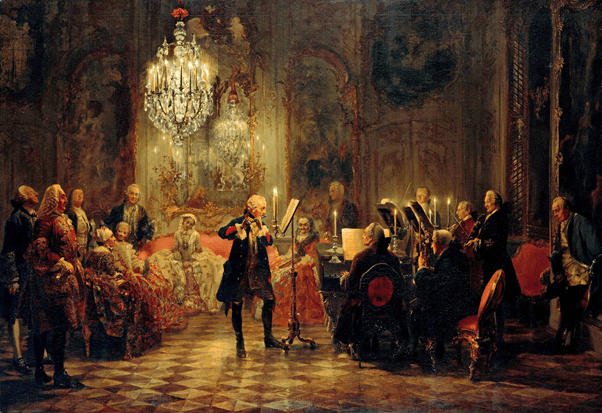
In this essay I compared two works from the early twentieth century. These compositions are Pulcinella by Igor Stravinsky and Symphony No.1 in D major, Op.25 “Classical Symphony” by Sergei Prokofiev. Both works are early examples of the neo-classical period. After the brief introduction of the composers, I describe the circumstances and influences which helped the composition process. This followed by an analyzation of the stylistic elements which typical to the Classical era. Beside the Classical influence I also explore other characteristic elements, which brings us more to the twentieth century style. The analyzation followed by a discussion of the different approach by the two composers. Finally, I finish my essay with a conclusion where I summarise my findings.
The word Classicism originated from Latin. It refers the art produced in antiquity or the art inspired by that antiquity. The elements of the Classical style have been described by Pecsi are generally associated with the art of antiquity. Texture is simpler than the Baroque era. The music was polished, refined, and melodic. It has less polyphony, but more leading melodies supported by simple harmonies. The instrumental music became more important than vocal music, which standardized the symphony orchestras, chamber ensembles, pianos, and other different compositional forms. Modulation is staying close to the original key and the dissonance is always resolved. The use of the rhythmic effects gives interests to the accompaniment. If there are multiple themes within the piece, they are often contrasted by the use of a tempo. For example, if a work begins with an energetic (fast) first theme, it will be followed by a lyrical (slow) second one. Phrases are balanced, and the music is usually arranged in certain forms even dance forms, for example sonata, theme and variations, rondo, minuet, and other dance forms. (Pecsi, 1998), (Kuiper, 2020)
Neoclassicism was a development between the two World Wars, where composers drew inspiration from the 18th century music. Stravinsky and Prokofiev are not only the two leading composers of this period, but also part of the development of neoclassical music. The composers return to balanced form, clarity, economy and emotional restraint, and 18th century compositional processes and techniques. (White and Taruskin, 2020)
Igor Stravinsky (1882-1971) was a Russian composer who had a major impact on music after World War I. Serge Diaghilev commissioned Stravinsky for Ballets Russes after he heard Scherzo. After World War I Diaghilev proposed a ballet which based on an early 18th century commedia dell`arte libretto and the music was written by Giovanni Battista Pergolesi (1710-1736). Although Stravinsky was hesitant at first, he re-wrote the piece in a more modern way. He began writing Pulcinella in 1919 and he completed the score in April 1920. The ballet was premiered on the 15th May 1920 by the Ballets Russes at the Paris opera. This piece marked the beginning of Stravinsky`s neoclassical period. (Pecsi, 1998)
The piece written in a modern way using specific themes, textures, modern rhythms, cadences, and harmonies. In this new work Stravinsky abandoned the large orchestra and he wrote for a modern chamber orchestra with three solo singers. Structurally, the work is quite classical. It remains straightforward with little alterations. The composer used different technic in each piece to create contrast, such as different tempo, tone colour, regular or irregular rhythms and straightforward or complex tonality.
In the first movement Sinfonia, Stravinszky uses a classical contrast of tonic and dominant key and employs a rounded binary form. Although the form is concerto grosso, the composer also uses several Baroque dance forms such as toccata, gavotte, minuet and siciliana.
While Stravinsky is following the original melodic and bass lines, he implements twentieth century elements. One of the examples is in the second movement Serenata (bar 1-4), where the oboe and viola play the original melody and bass lines, while the rest of the orchestra plays ostinato Cs and Gs. Also, in this movement he uses saltando figures in the strings which are typical effects of late romantic to modern era and an example of harmonic colouring. Example 1 shows the saltando figures in the Serenata in the strings.
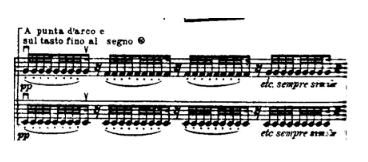
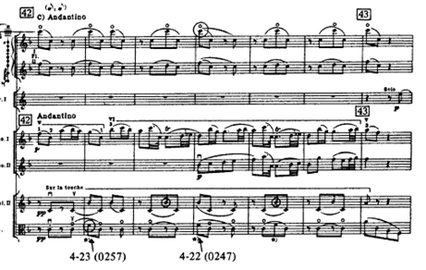
In the Andantino (third movement) Stravinsky adds odd notes which creating new, non-triadic harmony. These added notes (circled in Example 2) are not in the original score and also, they are not indicated by the figured bass.
Stravinsky broke away from the Classical style was the use of rhythm. For example, the additional beats in the first movement Sinfonia bars 11-14th. (Example 3).
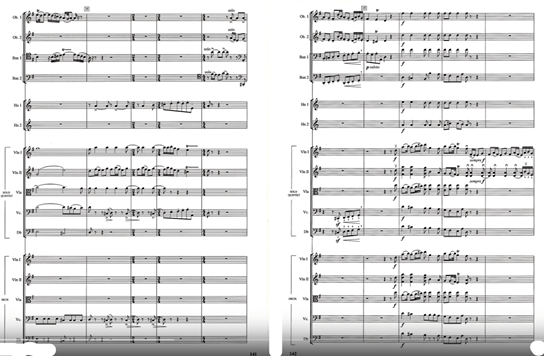
Other example is the subtraction of the beats in the eighth movement Minuetto bars 1-9. Another example is the introduction of the bass aria “Con queste paroline”, where he creates a prominent sounding effects through the use of unexpected accents. Allegro Assai also have a modern effect with its irregular phrase structure, sudden dynamic and rhythmic changes, intensive, disjunct melodies, and a wide range of tone colour. Tarantella has a colourful orchestration and in Vivo the original cello and basso concerto is completed with additional effects from the brass section.
The frequent use of techniques such as ostinato, glissando, pizzicato, or staccato are uncharacteristic to the Classical style. Occasionally, basic imitative counterpoint is used which is a stylistic shift, as Stravinsky avoided imitation in counterpoint before his neoclassical period. (Szabo, 2011 and Myers, 2015)
Sergey Prokofiev (1891-1953) was a 20th century Russian composer. After the Russian revolution in 1917 Prokofiev was full of joy of victory. This social and national renewal inspired him, and he wrote a lot of new music including the Classical Symphony which premiered on April 21, 1918 in Petrograd, conducted by Prokofiev himself, and has become one of his most popular works. (Nestyev and Taruskin, 2020)
With the composition of Classical Symphony Prokofiev took some unique decisions. First, he decided to work in a farm outside the capital. He also approached the symphony as a true master which means he did not use piano during the composition process. However, the most significant decision was his overall approaches to the piece. He followed Joseph Haydn`s style and draw inspiration from other classical composers such as Mannheim group. The result was a piece that concise and playful, renewed traditional classical forms by modern harmonies, rhythms, and orchestral colours.
Prokofiev`s work is in four movements (Sonata, Slower Lyrical, Gavotte and Sonata) typical of a classical symphony. One part of the piece gives an overall sense of balance which is classical. The other part sounds more modern by the new elements.
The melodies are clear and supported by a vibrant and dynamic texture. Sections of piano and forte are alternating which is connected to classical style such as Mannheim rockets. For example, the first movement Allegro opens with an explosively rising arpeggio. Also, in the second theme the composer applies wide pitch range which is not a typical Classical era style.
The tonal language of this piece considered 20th century. While there is still interaction between tonic and dominant, the composer also uses modulations to distant keys. For example, the first theme in the first movement is in D major which modulates to the distant key of C major. This practice is different than the one in Haydn`s time.
Other 20th century style is the phrase length. Haydn altered phrase length to create a surprise effect. Prokofiev is doing this much more freely and frequently. Example the third repetition of the first movement exposition which is in a tonic key of D major, but now the composer altered the phrase length which gives an irregular sound to the piece.
In the third movement, Prokofiev replaced the generally used minuet to gavotte which is a stylized classical dance movement. This change is a twentieth century style but the use of the da capo repeat is eighteenth century practice.
Also, the composer returns to the twentieth century with use of harmonies. (A Modern Classic: Prokofiev’s Classical Symphony, 2018)
In conclusion, both works are based on the 18th century musical style, with modern alterations. Both composers created an original piece of music imitating the Classical period but there are noticeable differences between the two compositions. First is the original of the material. While Stravinsky used an 18th century piece written by another composer, Prokofiev`s work is original which he composed himself. Other difference is the use of the tone colours. While Prokofiev stays close to the tone colours and playing styles of the Classical era, Stravinsky uses instrumentation to bring 20th century style into the piece. For example, the use of instrumental effects such as flautando and saltando in the strings, and glissandi by the trombone. Stravinsky also use greater ranges for example in the oboe and bassoon section. He also creates imbalance between the instruments of different timbres such as the combination of fortissimo trombone and contrabass in the seventh movement. Another difference is the use of vocals. Stravinsky included three solo singers in his piece while Prokofiev only used instruments.
As we see there are lot of similarities between the two pieces, but Prokofiev`s Classical Symphony is closer to the classical style than Pulcinella by Stravinsky, as the characteristic elements in his work are brings us more to the twentieth century style.
Word: 1554
Reference
Geza, P., 1998. Kulcs A Muzsikahoz. 4th ed. Pecs: Kulcs a Muzsikahoz Alapitvany, pp.79-82.
English: Pecsi, G., 1998. Key To The Music. 4th ed. Pecs: Key of the Music Foundation, pp.79-82.
Kuiper, K., 2020. Cervantes Prize | Award. [online] Encyclopedia Britannica. Available at: <https://www.britannica.com/art/Cervantes-Prize> [Accessed 18 March 2020].
White, E. and Taruskin, R., 2020. Classicism And Neoclassicism | Arts. [online] Encyclopedia Britannica. Available at: <https://www.britannica.com/art/Neoclassicism> [Accessed 14 March 2020].
Pecsi, G., 1998. Key To The Music. 4th ed. Pecs: Key to the Music Foundation, pp.262-263.
Stravinsky, I. (1949) Suite de Pulcinella. London: Boosey and Hawkes Music Publishers Ltd
Szabo, Kyle, “The evolution of style in the neoclassical works of Stravinsky” (2011). Dissertations. 83.https://commons.lib.jmu.edu/diss201019/83
Myers, C., 2015. About STRAVINSKY’s Pulcinella Suite. [online] Redlands Symphony. Available at: <https://www.redlandssymphony.com/pieces/pulcinella-suite> [Accessed 20 March 2020].
Nestyev, I. and Taruskin, R., 2020. Sergey Prokofiev – Foreign Period. [online] Encyclopedia Britannica. Available at: <https://www.britannica.com/biography/Sergey-Prokofiev/Foreign-period> [Accessed 24 March 2020]
Houston Symphony. 2018. A Modern Classic: Prokofiev’s Classical Symphony. [online] Available at: <https://houstonsymphony.org/prokofiev-classical-symphony/> [Accessed 26 March 2020]
Straus, J., 1986. The Musical Quarterly. 72nd ed. [ebook] Oxford University Press, pp.301-328. Available at: <https://www.jstor.org/stable/948144?seq=8#metadata_info_tab_contents> [Accessed 26 March 2020]
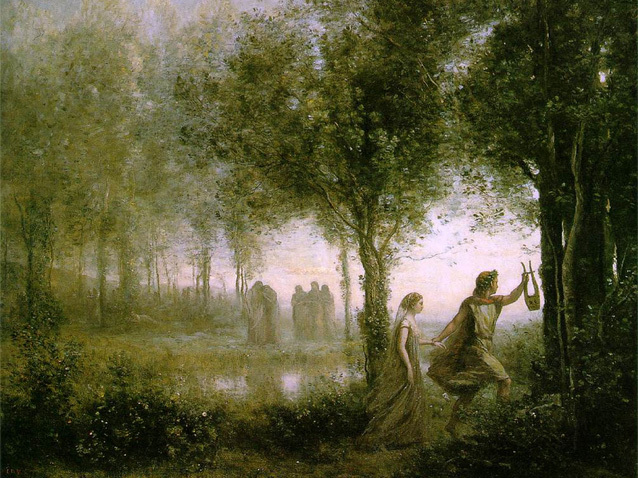
Cover Photo: Mertin, A., 2013. The History of Classical Music. [image] Available at: <https://www.gentlemansgazette.com/history-of-classical-music/> [Accessed 20 April 2020]
Reflective Account
In this reflective account, I will focus more on parts where I found it particularly interesting and challenging. Also, I highlight issues which occurred in previous assignments and following tutor advice these are corrected.
The Classical period broke down the tradition of Baroque. It started a new era with new characteristics on the field of Arts. The musicians developed a highly successful way for creating art which would please both senses and the intellect.
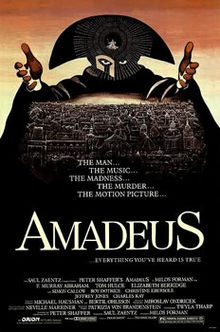
During part four of the course I have extended my knowledge about music and composers from the Classical era. Although I am familiar with vocal pieces from Mozart for example, the instrumental music was a grey area for me. I was introduced to details of the elements of the Classical style throughout listening to different pieces such as Mozart Piano Concerto No.20 and Beethoven Piano Sonata No.14. Certainly, this listening exercise increased my understanding of classical characteristics within a piece just like opera and instrumental works. Also, I found two exercises really interesting and useful. One was the first exercise in this part, where I had to describe a piece with simple words. Today more children learning about music, so it is important to be able to explain different compositions on their own words. This way they have a better understanding. Another exercise was Amadeus. I always followed the music in a film, but only the main theme. Now I had an opportunity to hear every sound in detail and analyse its connection with the scene.
One of the course practices was following the score whilst listening to pieces. As an active musician I had opportunities to perform within different settings, so this is not new for me and feel comfortable with. I find that listening to music can be enjoyable if I follow the whole score at the same time, it is like reading a story from a book.
Also, the projects extended my research and the practice of gathering evidence from a wide range of sources. Following my tutor feedback, I avoided Wikipedia and focused on more reliable sources such as relevant websites, blogs, books, and journals. I also continue to ensure that all research is correctly referenced, including materials that in Hungarian language. I used Hungarian and also English referencing for a better understanding.
Following my tutor advice, I had two more areas I had to focus on. One was my blog. I changed the structure of the page and made it clear and straightforward. Now visitors can easily navigate within the content. Another issue was my academic writing skills. To improve it I had to approach my essay carefully. To begin with I wrote a rough idea of how the essay was to be written, for example include conclusion which I left out from my last assignment. I also made sure to do proof reading to avoid grammatical errors.
I organised to attend two live concerts during this part of the course, but unfortunately the present situations did not allow to participate them as both of them were cancelled.
Word: 507
Reflection on Tutor Feedback for Assignment Four
I was happy with my tutor`s feedback as it reflects my improvement. Although the comment was positive, I still made a few mistakes throughout my assignment.
First, I had to add more details and supported my content with score examples. Then I made clearer which composer I am talking about in the discussion of the piece. In my conclusion I also followed my tutor`s advice and took some of my points further. As requested, I moved my reference after the essay so it clearly shows that the resources belong directly to the content.
My listening log had a lack of content so I developed it by adding more entries.
Assignment 4
The Classical Period
In this essay I compared two works from the early twentieth century. These compositions are Pulcinella by Igor Stravinsky and Symphony No.1 in D major, Op.25 “Classical Symphony” by Sergei Prokofiev. Both works are early examples of the neo-classical period. After the brief introduction of the composers, I describe the circumstances and influences which helped the composition process. This followed by an analyzation of the stylistic elements which typical to the Classical era. Beside the Classical influence I also explore other characteristic elements, which brings us more to the twentieth century style. The analyzation followed by a discussion of the different approach by the two composers. Finally, I finish my essay with a conclusion where I summarise my findings.
The word Classicism originated from Latin. It refers the art produced in antiquity or the art inspired by that antiquity. The elements of the Classical style have been described by Pecsi are generally associated with the art of antiquity. Texture is simpler than the Baroque era. The music was polished, refined and melodic. It has less polyphony, but more leading melodies supported by simple harmonies. The instrumental music became more important than vocal music, which standardized the symphony orchestras, chamber ensembles, pianos and other different compositional forms. Modulation is staying close to the original key and the dissonance is always resolved. The use of the rhythmic effects gives interests to the accompaniment. If there are multiple themes within the piece, they are often contrasted by the use of a tempo. For example, if a work begins with an energetic (fast) first theme, it will be followed by a lyrical (slow) second one. Phrases are balanced, and the music is usually arranged in certain forms even dance forms, for example sonata, theme and variations, rondo, minuet and other dance forms. (Pecsi, 1998), (Kuiper, 2020)
Neoclassicism was a development between the two World Wars, where composers drew inspiration from the 18th century music. Stravinsky and Prokofiev are not only the two leading composers of this period, but also part of the development of neoclassical music. The composers return to balanced form, clarity, economy and emotional restraint, and 18th century compositional processes and techniques. (White and Taruskin, 2020)
Igor Stravinsky (1882-1971) was a Russian composer who had a major impact on music after World War I. Serge Diaghilev commissioned Stravinsky for Ballets Russes after he heard Scherzo. After World War I Diaghilev proposed a ballet which based on an early 18th century commedia dell`arte libretto and the music was written by Giovanni Battista Pergolesi (1710-1736). Although Stravinsky was hesitant at first, he re-wrote the piece in a more modern way. He began writing Pulcinella in 1919 and he completed the score in April 1920. The ballet was premiered on the 15th May 1920 by the Ballets Russes at the Paris opera. This piece marked the beginning of Stravinsky`s neoclassical period. (Pecsi, 1998)
The piece written in a modern way using specific themes, textures, modern rhythms, cadences and harmonies. In this new work Stravinsky abandoned the large orchestra and he wrote for a modern chamber orchestra with three solo singers. Structurally, the work is quite classical. It remains quite straightforward with little alterations. The composer used different technic in each piece to create contrast, such as different tempo, tone colour, regular or irregular rhythms and straightforward or complex tonality.
In the first movement Sinfonia, he uses a classical contrast of tonic and dominant key and employs a rounded binary form. Although the form is concerto grosso, the composer also uses several Baroque dance forms such as toccata, gavotte, minuet and siciliana.
While Stravinsky is following the original melodic and bass lines, he implements twentieth century elements. One of the examples is in the second movement Serenata (bar 1-4), where the oboe and viola play the original melody and bass lines, while the rest of the orchestra plays ostinato Cs and Gs. Also, in this movement he uses saltando figures in the strings which are typical effects of late romantic to modern era.
In the Andantino (third movement) Stravinsky adds odd notes which creating new, non-triadic harmony.
Stravinsky broke away from the Classical style was the use of rhythm. For example, the additional beats in the first movement Sinfonia bars 11-14th or the subtraction of the beats in the eighth movement Minuetto bars 1-9. Another example is the introduction of the bass aria “Con queste paroline”, where he creates a prominent sounding effects through the use of unexpected accents. Allegro Assai also have a modern effect with its irregular phrase structure, sudden dynamic and rhythmic changes, intensive, disjunct melodies and a wide range of tone colour. Tarantella has a colourful orchestration and in Vivo the original cello and basso concerto is completed with additional effects from the brass section.
The frequent use of techniques such as ostinato, glissando, pizzicato or staccato are uncharacteristic to the Classical style. Occasionally, basic imitative counterpoint is used which is a stylistic shift, as Stravinsky avoided imitation in counterpoint before his neoclassical period. (Szabo, 2011 and Myers, 2015)
Sergey Prokofiev (1891-1953) was a 20th century Russian composer. After the Russian revolution in 1917 Prokofiev was full of joy of victory. This social and national renewal inspired him, and he wrote a lot of new music including the Classical Symphony which premiered on April 21, 1918 in Petrograd, conducted by Prokofiev himself, and has become one of his most popular works.. (Nestyev and Taruskin, 2020)
With the composition of Classical Symphony Prokofiev took some unique decisions. First, he decided to work in a farm outside the capital. He also approached the symphony as a true master which means he did not use piano during the composition process. However, the most significant decision was his overall approaches to the piece. He followed Joseph Haydn`s style and draw inspiration from other classical composers such as Mannheim group. The result was a piece that concise and playful, renewed traditional classical forms by modern harmonies, rhythms and orchestral colours.
Prokofiev`s work is in four movements (Sonata, Slower Lyrical, Gavotte and Sonata) typical of a classical symphony. One part of the piece gives an overall sense of balance which is classical. The other part sounds more modern by the new elements.
The melodies are clear and supported by a vibrant and dynamic texture. Sections of piano and forte are alternating which is connected to classical style such as Mannheim rockets. For example, the first movement Allegro opens with an explosively rising arpeggio. Also, in the second theme the composer applies wide pitch range which is not a typical Classical era style.
The tonal language of this piece considered 20th century. While there is still interaction between tonic and dominant, the composer also uses modulations to distant keys. For example, the first theme in the first movement is in D major which modulates to the distant key of C major. This practice is different than the one in Haydn`s time.
Other 20th century style is the phrase length. Haydn altered phrase length to create a surprise effect. Prokofiev is doing this much more freely and frequently. Example the third repetition of the first movement exposition which is in a tonic key of D major, but now the composer altered the phrase length which gives an irregular sound to the piece.
In the third movement, Prokofiev replaced the generally used minuet to gavotte which is a stylized classical dance movement. This change is a twentieth century style but the use of the da capo repeat is eighteenth century practice.
Also, the composer returns to the twentieth century with use of harmonies. (A Modern Classic: Prokofiev’s Classical Symphony, 2018)
Both composers created an original piece of music imitating the Classical period. The most noticeable difference between the two composers is the original of the material. Stravinsky used an 18th century piece written by another composer. Prokofiev`s work is original which he composed himself. Other difference is the use of the tone colours. While Prokofiev stays close to the tone colours and playing styles of the Classical era, Stravinsky uses instrumentation to bring 20th century style into the piece. For example, the use of instrumental effects such as flautando and saltando in the strings, and glissandi by the trombone. Stravinsky also use greater ranges for example in the oboe and bassoon section. He also creates imbalance between the instruments of different timbres such as the combination of fortissimo trombone and contrabass in the seventh movement. Another difference is the use of vocals. Stravinsky included three solo singers in his piece while Prokofiev only used instruments.
In conclusion, both works are based on the 18th century musical style, with modern alterations. Although there are lot of similarities between the two pieces, Prokofiev`s Classical Symphony is closer to the classical style than Pulcinella by Stravinsky.
Word: 1462
Reflective Account
In this reflective account, I will focus more on parts where I found it particularly interesting and challenging. Also, I highlight issues which occurred in previous assignments and following tutor advice these are corrected.
The Classical period broke down the tradition of Baroque. It started a new era with new characteristics on the field of Arts. The musicians developed a very successful way for creating art which would please both senses and the intellect.
During part four of the course I have extended my knowledge about music and composers from the Classical era. Although I am familiar with vocal pieces from Mozart for example, the instrumental music was a grey area for me. I was introduced to details of the elements of the Classical style throughout listening to different pieces such as Mozart Piano Concerto No.20 and Beethoven Piano Sonata No.14. Certainly, this listening exercise increased my understanding of classical characteristics within a piece just like opera and instrumental works. Also, I found two exercises really interesting and useful. One was the first exercise in this part, where I had to describe a piece with simple words. Today more children learning about music, so it is important to be able to explain different compositions on their own words. This way they have a better understanding. Another exercise was Amadeus. I always followed the music in a film, but only the main theme. Now I had an opportunity to hear every sound in detail and analyse its connection with the scene.
One of the course practices was following the score whilst listening to pieces. As an active musician I had opportunities to perform within different settings, so this is not new for me and feel comfortable with. I find that listening to music can be enjoyable if I follow the whole score at the same time, it is like reading a story from a book.
Also, the projects extended my research and the practice of gathering evidence from a wide range of sources. Following my tutor feedback, I avoided Wikipedia and focused on more reliable sources such as relevant websites, blogs, books and journals. I also continue to ensure that all research is correctly referenced, including materials that in Hungarian language. I used Hungarian and also English referencing for a better understanding.
Following my tutor advice, I had two more areas I had to focus on. One was my blog. I changed the structure of the page and made it clear and straightforward. Now visitors can easily navigate within the content. Another issue was my academic writing skills. To improve it I had to approach my essay carefully. To begin with I wrote a rough idea of how the essay was to be written, for example include conclusion which I left out from my last assignment. I also made sure to do proof reading to avoid grammatical errors.
I organised to attend two live concerts during this part of the course, but unfortunately the present situations did not allow to participate them as both of them were cancelled.
Word: 507
Reference
Geza, P., 1998. Kulcs A Muzsikahoz. 4th ed. Pecs: Kulcs a Muzsikahoz Alapitvany, pp.79-82.
English: Pecsi, G., 1998. Key To The Music. 4th ed. Pecs: Key of the Music Foundation, pp.79-82.
Kuiper, K., 2020. Cervantes Prize | Award. [online] Encyclopedia Britannica. Available at: <https://www.britannica.com/art/Cervantes-Prize> [Accessed 18 March 2020].
White, E. and Taruskin, R., 2020. Classicism And Neoclassicism | Arts. [online] Encyclopedia Britannica. Available at: <https://www.britannica.com/art/Neoclassicism> [Accessed 14 March 2020].
Pecsi, G., 1998. Key To The Music. 4th ed. Pecs: Key to the Music Foundation, pp.262-263.
Stravinsky, I. (1949) Suite de Pulcinella. London: Boosey and Hawkes Music Publishers Ltd
Szabo, Kyle, “The evolution of style in the neoclassical works of Stravinsky” (2011). Dissertations. 83.https://commons.lib.jmu.edu/diss201019/83
Myers, C., 2015. About STRAVINSKY’s Pulcinella Suite. [online] Redlands Symphony. Available at: <https://www.redlandssymphony.com/pieces/pulcinella-suite> [Accessed 20 March 2020].
Nestyev, I. and Taruskin, R., 2020. Sergey Prokofiev – Foreign Period. [online] Encyclopedia Britannica. Available at: <https://www.britannica.com/biography/Sergey-Prokofiev/Foreign-period> [Accessed 24 March 2020]
Houston Symphony. 2018. A Modern Classic: Prokofiev’s Classical Symphony. [online] Available at: <https://houstonsymphony.org/prokofiev-classical-symphony/> [Accessed 26 March 2020]
Tutor reports
 Aname
Aname 