Monteverdi – Lamento della Ninfa (Monteverdi, 1614)
Claudio Monteverdi (1567-1643) was the most innovative composer of the early Baroque period. His most notable musical characteristic is how he matched music with text (text painting). His madrigal Lamento della Ninfa was written between 1614-1638 (exact date not known). The musical elements of this madrigal are full of text painting and creative expression. As the composition`s title suggest, this piece is a lament which is a passionate expression of grief and sorrow and usually used in mourning. The text contains three parts and a solo soprano line symbolizing the nymph who is lamenting. The text painting in this madrigal really helps the listener feel the emotion of the lament (the sense of loss). For example, the use of dissonance, a modulation to minor mode and diminished chord.
Thomas Morley (1557 or 1558-1602) was an English composer, well known for his compositional output in the form of secular madrigals. Sing we and chant it is a five-part a cappella madrigal and has many characteristics of the late Renaissance period which includes secular text and repeated sections. The work is very structured and break up into sections between homophonic with little imitation and the “fa, la, la” refrain. Compared to the Italian madrigal, the piece is light and happy. It is interesting to hear the different melody in each part which makes one complete piece of music. The repeats allow the music to take on a rhythm and also the singers to use dynamics (soft or loud). During the research I found out that not everyone likes madrigal music. Some people are fascinated, some just simply enjoys the piece and some people simply dislike this composition.
Guillaume de Machaut: La Messe de Nostre Dame – Kyrie (Machaut, 1365)
Guillaume de Machaut (c. 1300-1377) composed Messe de Nostre Dame around 1365. It was a landmark in musical history as it was the earliest known polyphonic mass written by one composer. The texture of the Kyrie is written for four voices which complements each other harmonically and highlight the harmonic structures through its neutrality. The upper lines are moving in independent rhythmic motion and long rhapsodic melodic sections over a tenor in isorhythm. In the tenor line there is a four-note motif can be heard. This movement uses only a single text which sang by all four voices. In the Triplum line we can discover that the weak beats are stressed which gives the melody a little skipping feel. Kyrie sounds like a Gregorian chant. It is peaceful and relaxing due to its conjunct melody with long melisma on the last syllable of Kyrie.
The Mass in B minor completed in 1748 and it first performed in Leipzig, Germany in 1859. Bach put together the Mass from his different earlier works and represents his highest skill as a composer for solo instruments and voices, chamber ensemble (trio sonata), virtuoso chorus, and large orchestra. We can discover that the Mass incorporates ancient and modern styles, introverted and extroverted moods, the antico style and contemporaries from Palestrina and also Baroque dance forms and advanced counterpoint. This composition is an expression of the composer`s faith which lived through the music, referring to both early and recent sacred music and to both sacred and secular styles.
The text is in Latin of the Ordinarium missae. Every technique made in the setting of the text (division among movements, voicing, instrumentation, tonality, style, mood) reveals an awareness of its central narrative. Each of the vocal soloists and instrumental family of the orchestra has their moment and perfectly represented. For example, soprano II and strings (violin) in the Laudamus, soprano I, tenor and flutes in the Domine Deus, the alto and oboes in Qui sedes, the bass and brass (horn) in Quoniam. Bach did not use the traditional grouping of the text which was five sections (Kyrie, Gloria, Credo, Sanctus, and Agnus Dei). Instead, he split up each of these parts into several movements (actually 25 separate parts). Each of them expresses a different attitude of worship such as pleading for mercy in the primal Kyrie, celebrating in Gloria, beleiving and testifying in Credo, ecstasy in Sanctus, blessing in Benedictus and praying for peace in Agnus Dei.
Kyrie I
Kyrie eleison. – Lord have mercy upon us.
The Kyrie opens tutti and without orchestral introduction. After the dramatic opening, the music develops into fugue. The mood is spiritual (as it is supplication to the Father) with an increasing sense of urgency. Kyrie is also characterized by extreme dissonance and chromaticism.
Christe eleison
Christe eleison. – Christ have mercy upon us.
This movement has a mood of piece and serenity. The instrumental texture is straightforward. Bach uses duets to symbolize the duality of Christ (Son) and God (Father). The vocal duet uses parallel intervals and strict imitation to indicate the unity of Father and Son. The orchestra also divided in two. The unison violins (I and II) are in duet with the continuo instruments.
Kyrie II
Kyrie eleison. – Lord have mercy upon us.
Bach uses the style antico which is an archaic style of 16th century church music. It makes the mood more simpler and objective. This style avoids large skips, uses instruments to reinforce the voice parts and permits elongated and asymmetrical phrases. The theme begins with intervals such as minor and major seconds, which similar to the B-A-C-H motif. We can find a clear example of stretto which is overlapping fugual entrances followed by an offbeat. This movement can be connected to the opening Kyrie by its chromaticism and harmonic instability.
Gloria
Gloria in excelsis Deo – Glory to God in the highest
This movement used an extroverted style with trumpets, drums, and instrumental virtuosity. The opening section is based on a Baroque dance rhythm which closest to a gigue or passepied. The concerto form is also invoked in this movement which eventually turns into fugue. A clear example of the ritornello technique (restatement of a block of material to create a sense of arrival) can be heard when the entire orchestral introduction returns but this time as part of the choral texture.
Et in terra pax
et in terra pax hominibus bonae voluntatis – and on earth peace, good will toward men
This movement begins with an octave leap down in the basses which shifts our focus from the heavens to earth. The fugue is used to represent many nations and peoples of earth who respond to the good things brought by the angles. Its primary subject represented by the use of appoggiatura. Bach creates a pastoral scene by the tenors and basses emphasizing the word “piece”. The fugue draws to conclusion by repeating the word “piece” by the basses and the phrase “and on earth piece” by the chorus which emphasize Bach`s central point.
Laudamus te
Laudamus te. Adoramus te. Benedicimus te. Glorificamus te. – We praise thee. We adore thee. We bless thee. We glorify thee.
In this movement the virtuosity continues with a suggestion of double concerto using violin and mezzo-soprano as soloists. The vocal and instrumental solos alternate with the choral movements of the Gloria. This is a simple song of a praise containing two richly ornamented complementary and intertwined melodies. The soprano`s ascending opening line contains trills which are particularly characteristic. The slurred “et in terra pax” which used in the prior movement is echoed in the orchestra. Throughout the Mass, the slurred appoggiatura (means leaning) is used to deepen meaning, to soften edges, to intensify rhythm and chromaticism.
Gratias agimus tibi
Gratias agimus tibi propter magnam gloriam tuam. – We give thanks to thee on account of thy great glory
Similarly, to the second Kyrie, the orchestra doubles the chorus in a stile of antico fugue. At the climatic words “magnam gloriam” (“great glory”) Bach brings the trumpets in with an independent music which gives the piece a glorious effect.
Domine Deus
Domine Deus, rex coelestis, Deus Pater omnipotens. Domine Fili unigenite, Jesu Christealtissime. Domine Deus, Agnus Dei, Filius Patris. – Lord God, king of heaven, God the omnipotent Father. Lord the only begotten Son, Jesus Christ, the most high. Lord God, Lamb of God, Son of the Father:
The first two parts set as a duet between soprano and tenor which represents the intimate relationship between the Father and the Son. At the part of “Lamb of God, Son of the Father” the two voice join together. The use of G major and the solo flute strongly associated with the character of Jesus. The second section leads into the Qui tollis without break.
Qui tollis
Qui tollis peccata mundi, miserere nobis. Qui tollis peccata mundi, suscipe deprecationem nostram. – Who takest away the sins of the world, have mercy upon us. Who takest away the sins of the world, hear our prayer.
This movement is a striking change from the sweet and innocent atmosphere that the previous movement had. A restrained mood is established by using only the second sopranos in this four-part chorus and also by the scoring which contains two flutes along with the strings. The doleful and dissonant chorus represents a scene where Jesus came to the real world where he is sullied by human sin. The instruments of the orchestra are layered rhythmically. The continuo instruments begin the piece, then the cello joins in with quarter notes. This followed by the violas with slurred eight-notes and finally the pair of flutes with sixteenth notes. The flutes paint a picture of someone who are trying to break free.
Qui sedes ad dextram Patris
Qui sedes ad dextram Patris, miserere nobis. – Who sittest at the right hand of the Father, have mercy upon us.
This is a solo movement. The restrained mood continues with a gentle aria for mezzo-soprano which accompanied by the soft tones of the oboe`d amore. Sometimes they are alternating and sometimes they are cooperating with each other which symbolize the interrelationship between the Father and the Son. The brief Adagio in this movement emphasize the prayer for mercy. Bach brings the focus back down to earthy sin by the soloist descending phrase ending on the word “nobis” (“us”).
Quoniam tu solus sanctus
Quoniam tu solus sanctus, tu solus Dominus, tu solus altissimus: – Jesu Christe For thou alone art holy, thou alone art God, thou alone art most high: Jesus Christ
Bach uses a unique instrumentation for this movement such as horn, two bassoons, and continuo. He also uses a bass soloist which represents the voice of Jesus. The text is richly ornamented with trills which emphasize the word “Sanctus” (Holy) and “Dominus” (Lord).
Cum Sancto Spiritu
Sancto Spiritu, in gloria Dei Patris. – Amen.with the Holy Ghost, in the glory of God the Father. Amen.
This final movement of the Gloria explodes with euphoric energy (almost continuous use of sixteenth notes) and a virtuosic concerto movement using the full forces of the orchestra and the five-part chorus. The movement ends with a burst of fireworks from the trumpets.
Credo in unum Deum
Credo in unum Deum – I believe in one God
This movement scored for a five-part chorus, accompanied by two independent violin lines (plus continuo). This creates a seven-voice contrapuntal texture. The style is reminiscent to the 16th century practices (mixolydian mode). The theme is introduced in each of the seven voice (in order: tenors, basses, altos, first sopranos, second sopranos, first violins and second violins). Bach applies a more sophisticated stile antico method which creates freer rhythms, more fluid vocal lines, shorten the doubling instruments and gain support only by a bass line. The use of the bass line indicates a modern touch which is essentially a Renaissance motet. The stile antico prevents a subjective statement of belief.
Patrem omnipotentem
Patrem omnipotentem, factorem coeli et terrae, visibilium omnium, et invisibilium. – the Father Almighty, maker of heaven and earth, and of all things visible and invisible.
Bach set the text as two movements because he wanted to create two different styles, textures, and instrumentation. The two movements also share motivic and tonal relations. The composer wanted to emphasize the unity of the textural idea. He used only four voices in the choral texture with a solo trumpet which basically substitutes for a fifth choral voice.
Et in unum Dominum
Et in unum Dominum Jesum Christum, Filium Dei unigenitum. Et ex Patre natum ante omnia saecula. Deum de Deo, lumen de lumine, Deum verum de Deo vero.Genitum, non factum, consubstantialem Patri: per quem omnia facta sunt. Qui propter nos homines, et propter nostram salutem descendit de coelis. – And in one Lord Jesus Christ, the only-begotten Son of God, born of the Father before all ages; God of God, Light of Light, very God of very God; begotten, not made, being of one substance with the Father, by whom all things were made, who for us men and for our salvation came down from heaven.
Similarly, to Christe, the duet signifies the second person of the Holy Trinity. This is the longest single movement text setting in the entire Mass. Bach uses the first and the second violin as a symbol of the unity of Father and Son. They are playing the same figure at the beginning but a beat apart and with a different articulation (staccato – legato). The staccato part which represents the Father comes first and it has a stronger feeling as the violin doubled by two oboes d`amore. The gentler legato part symbolizes the Son.
Et incarnatus est
Et incarnatus est de Spiritu Sancto ex Maria Virgine: ET HOMO FACTUS EST. – And was incarnate of the Holy Ghost by the Virgin Mary, AND WAS MADE MAN
This movement is mournful, dissonant, and strongly influenced by the Italian Baroque style. We can find several symbols of the cross in this part of the Mass. One example is the subject of the fugue which uses several sharpened notes. The sharp symbol is looks like crosses. The German words for sharp and cross are identical. Another example is the Kreuz figure in the violin line. The intensification of this Kreuz figure reminds us to the three crosses on Golgota.
Crucifixus
Crucifixus etiam pro nobis sub Pontio Pilato, passus, et sepultus est. – And was crucified also for us under Pontius Pilate; he suffered and was buried.
Another example how Bach laid the oldest music (the Crucifixus) next to the newest (the Et incarnatus est) and have the two collaborate successfully with each other. This movement is a passacaglia (chaconne) with four measure continuo motive. This is repeated 12 times throughout the piece with a 13th added to prepare the transition to the chorus that follows. This figure is the lament bass (basso lamento) which is descending chromatic bass figure and it is a common Baroque motive. Bach uses repeated notes which create a throbbing effect. The instruments of the orchestra play three overlapping pulses which remind us that Jesus was crucified alongside with two man. Similarly, to Qui tollis, the pair of flutes represents Jesus. After the extreme dissonance in the piece, the chorus settles into a lower range as Jesus was laid to rest.
Et resurrexit
Et resurrexit tertia die, secundum Scripturas. Et ascendit in coelum: sedet ad dexteram Patris. Et iterum venturus est cum gloria judicare vivos et mortuos, cujus regni non erit finis – And on the third day he rose again according to the Scriptures, and ascended into heaven, and sitteth on the right hand of the Father, and he shall come again, with glory, to judge both the quick and the dead; whose kingdom shall have no end.
For the first time in Credo, the choir and the full forces of the orchestra enter as one to portray the jubilation of the resurrection. This mood is emphasized by the contrast between the ending of the Crucifixus (low, slow, soft) and the opening of the Et resurrexit (high, soft, loud). The close resemblance to the courante Baroque dance form, the instrumental interludes between the different families of the orchestra and the long sinfonia at the end add to the mood of celebration. The trumpets became important toward the end of the movement which symbolizes that Christ has joined to God.
Et in Spiritum sanctum Dominum
Et in Spiritum Sanctum, Dominum et vivificantem: qui ex Patre Filioque procedit. Qui cum Patre, et Filio simul adoratur et conglorificatur: qui locutus est per Prophetas. Etinunam, sanctam, catholicam et apostolicam Ecclesiam. – And I believe in the Holy Ghost, the Lord and Giver of life, who proceedeth from the Father and the Son, who with the Father and the Son is worshiped and glorified; who spake by the Prophets. And I believe in one holy Catholic and Apostolic Church.
This movement has a more detached mood. It is in a pastoral dance form performed by three solo voices. These voices represented by two oboes which symbolising the first and second persons of the Trinity and the bass which gives the aria a sacerdotal character.
Confiteor
Confiteor unum baptisma in remissionem peccatorum. Et expecto resurrectionem mortuorum… – I acknowledge one Baptism for the remission of sins, and I look for the resurrection of the dead…
Like the Credo, this movement is in stile antico and uses two complementary Gregorian themes over a walking bass line. There is a part where the basses and altos sing in a canon which is Gregorian chant. The dark and unstable harmonies in the Adagio brings towards to an uncertain outcome.
Et expect
Et expecto resurrectionem mortuorum. Et vitam ventura saeculi. Amen. – and I look for the resurrection of the dead, and the life of the world to come. Amen.
The Et expect is in a modern Baroque dance style with the rising figures at the beginning outlining a bourée rhythm. Linking the style antico and stile modern emphasize the timelessness and the timeliness of the creed. It is in a lively mood. The fanfare like figuration in the orchestra and the solo timpani are symbolic elements of an earthquake on the day of resurrection. The climbing nature of the fugue theme portrays Christ as he is rising into heaven.
Sanctus
Sanctus, Sanctus, Sanctus, Dominus Deus Sabaoth. Pleni sunt coeli et terra gloria eius. Holy, Holy, Holy, Lord God of Hosts. – Heaven and earth are full of hisglory
The six-voiced choral texture symbolizes the six-winged seraphim, an order of angels who are strongly associated with fire and purification. The rumbling timpani represents the quaking temple. There is also a predominance of six-measure phrases which includes the fugue subject. At the text Pleni sunt coeli, Bach applies lively figures. The subject jumps from a high note on the word “heaven” to a low note for “earth”. The movement closes with a fiery mode of expression.
Osanna
Osanna in excelsis. – Hosanna in the highest.
The Osanna text is joined to the Sanctus in the Mass Ordinary. It is a polychoral concerto for two four-part choirs and instruments. The principal theme of the Osanna is taken from the Cantata 125 and it is also echoing the “fanfare” theme from the Sanctus. The piece concludes with an extended sinfonia which reminds me of a festive coronation banquet.
Benedictus
Benedictus qui venit in nomine Domini. – Blessed is he who comes in the name of the Lord.
Contrasting with the dense texture of the Osanna, Benedictus is calm and chamber like. It scored for tenor (the voice of Evangelist), solo flute (associated with the figure of Jesus) and continuo instruments. The tenor ends the piece alone without any instrumental accompaniment which symbolise the sacrifice that Jesus will make later. The Kreuz figure in the solo flute emphasize the strong sense that Jesus will leaving us. While in the Gloria there was a fluid connection between the arias and choruses, here the connections are abrupt with rapid mood shifts between them.
Agnus Dei
Agnus Dei, qui tollis peccata mundi, miserere nobis. Agnus Dei, qui tollis peccata mundi, miserere nobis.(final statementomitted by Bach) – Lamb of God, who takest away the sins of the world, have mercy on us. Lamb of God, who takest away the sins of the world, have mercyon us
This movement is based on an alto aria and has motivic connection (example appoggiatura) with the first Kyire. The music is meditative and tranquil with some intensity provided by the chromaticism. The texture is simple, stripped of the ornamentation found in the cantata.
Dona nobis pacem
Dona nobis pacem. – Grant us peace.
To end his masterpiece, Bach returns to music from the Mass itself. It begins with only the basses of the chorus) which leads the listener out of the doubtful and anxious Agnus Dei. Bach repeats the word “piece” three times. The effect of the chorus and the instruments is magical, a vast expansion of the choral orchestral texture.
Johann Sebastian Bach: Brandenburg Concerto No.1 (Bach, 1711)
The Brandenburg Concertos are six concerti grossi, written by a German composer Johann Sebastian Bach (1685-1750). It considered a masterful example of the balance between a small group of soloists and a small orchestra. Bach composed this work between 1711-20 and dedicated to Christian Ludwig, the margrave (marquess) of Brandenburg and also the younger brother of King Frederick I of Prussia. This piece represents a popular music genre of the Baroque, called concerto grosso. In concerto grosso a group of soloists plays together with a small orchestra. The use of three movement with a fast-slow-fast tempo indicates that the Brandenburg Concerti were based on Italian concerto format.
The Brandenburg Concerto No. 1 in F major, BWV 1046 is the first of six great concertos and it is the only one with four movements. It is in a fast-slow-fast form with a final dance section added to the end. The orchestration is unusual. Bach using the hunting horns which sounds stands out, but the composer manages blend them into the ensemble through the use of multiple winds. Along with the horn, the violin piccolo also included to draw more attention to the innovative qualities of the composition.
The first movement is pure light swaggering elation. The two horns appear playing their first solo causing disturbance in the carefully balanced texture and the overall rhythm by their raucous and hunting sound.
The second movement is slow and soft and scored for the full ensemble. The mournful melody alternates between the oboe and violin piccolo in a canon. It also descends into the bass where it expands from its standard role to accompaniment. The minor seconds creates dissonance in the harmony and gives bitterness to the melancholy mood. One of the innovations from Bach can be found in the conventionally descending bass where the very end of each note first supported by oboes but then cancelled by unexpected chords in the strings which resulted a dry 20th century sound.
The third movement is the closest to a standard concerto format. To avoid fatigue the composer breaks the insistent 6/8 rhythm with a two-bar adagio. This movement contains a florid violin piccolo solo and it also features the trumpet with long sustained passages in its high register. The Brandenburg Concerto No 1 closes with a polacca and trio which provide a timbral and textural contrast. The polacca uses strings (excluding the violin piccolo) and continuo only. The trio for the minuet is set for oboes and bassoon, and the second trio consist two horns and unison oboes. This mean there is no bassline in this movement. The overall structure alternates the full minuet with the softer interludes which evokes the ritornello form.
G.Ph. Telemann: Concerto for Traverso and Recorder in E minor, TWV 52:e1 – Bremer Barockorchester (Telemann, 2016)
Georg Philipp Telemann (1681-1767) was a German composer and a contemporary of Bach. His Concerto in E minor for Flute and Recorder, TWV 52: e1 written around 1712-1721.
I found fascinating to listen the combination of these two timber instruments which blended beautifully. It makes this piece unique and gives the classical sound a folky pastoral element. This concerto has four uniquely contrasting movements.
The first movement is a Largo where the two solo instruments taking turns carrying the melody first in a craving mood and slow tempo than they are moving on to arpeggiated figures and a call and response section. The strings and the basso continuo play the accompaniment with a slow and drawn out pulses.
The second movement is an Allegro. Both the strings and the two soloists play thrilling and quickly rotating figures which gives a bright and cheerful mood to the piece. The strings act as commentators of the action.
The third movement is in Largo again but this time the piece has a more pastoral feeling and it is mainly in a major mode. The melodies are contrapuntal with interplay between the two solo instruments and the accompaniment plays in pizzicato. In the last few bars, the continuo plays some figures while the strings and the flute are holding long chords.
The fourth and final movement is a Presto and it feels like a dance. It starts with a unison which gives a strong emphasis to the piece. This unison doubled at the octave before the first solo melody joins in playing dense quaver figures which followed by some imitation with a “round” like structure. The all piece than repeated more forcefully and louder dynamic. There is some melodic development before the last repetition of the piece which is more accented and faster in tempo.
I really enjoyed listening this beautiful and easy piece which represented the composer ability to being able to adapt different styles and traditions into his music very well.
Reference:
Telemann, G., 2016. G.Ph. Telemann: Concerto For Traverso And Recorder In E Minor, TWV 52:E1 – Bremer Barockorchester. Available at: <https://www.youtube.com/watch?v=2D-y2kJU0lg> [Accessed 18 May 2020]
Domenico Scarlatti (Classical Net – Basic Repertoire List – D. Scarlatti, 1995)
Domenico Scarlatti composed several hundred keyboard sonatas, most of it in Spain while he was working at the Spanish court. Some of his sonatas were meant to be played in pairs such as Sonata K208 and K209. Each piece is in the key of A major with a well-defined two-part structure.
Sonata K 208
Scarlatti Sonata in A major, K208 (Scarlatti, 2014)
Sonata K209
Sonata In A Major K209 (Scarlatti, 2013)
Sonata K209 is inspired by a Spanish dance (jota aragonesa), characterized by the triple meter in a fast pace and rapid alternation between chords. Scarlatti uses different devices in this piece such as syncopation which imposes a ¾ pattern over two measures of 3/8 time and persistent repetitions.
While I was listening both pieces, I felt that I am in Spain. I can imagine the sunlight, warmth, happiness and of course the lifestyle such as Spanish dance.
The Four Seasons is one of the most famous sets of violin concertos. Outside of the concert hall, you can hear it in movies (Spy Game), television commercials (HP Touch Smart PC) or it performed in wedding ceremony.
Inspired by landscape paintings by Italian artist Marco Ricci, Vivaldi composed the Four Seasons between 1720 and 1723. He published his work in Amsterdam in 1725. The Four Seasons (Le quattro stagioni) consists of four concerti (Spring, Summer, Autumn and Winter). Each concerto represents one season of the year. Vivaldi included a series of poems describing each season`s events. Each one is in a distinct form containing three movements with fast-slow-fast tempos.
Spring
Antonio Vivaldi – Spring – The Four Seasons (Vivaldi, 1720)
The opening concerto of the Four Seasons is Spring. In the first movement we can hear bird song and a spring storm. The second movement is slow and dignified and it pictures a shepherd who sleeps with his dog by his side. The scene is tranquil and idyllic, capturing the peaceful idleness of spring. The third movement portrays a lively spring dance. The poem describes nymphs and shepherds dancing to festive sounds. The orchestra presents an upbeat melody as well as the sounds of a joyous gathering of people. The fast movements are written in Ritornello form, which means “returning”. The main theme played by the orchestra and reappeared after each solo section.
In the Spring we can discover many different techniques. The opening movement is joyful and consists of an opening phrase and an answering phrase. The answering phrase is the basis for the Ritornello form which gives the piece a feeling of continuity. This movement is played by the whole orchestra and goes to the words of the poem Spring has arrived. During the first solo, we can hear the imitation of birdsong by different techniques such as mordent, layered entries, staccato, trill and imitation. The second solo represents the flowing of streams and blowing of the wind by using slurs to slur every two notes together. The third solo describes a spring storm, with dark sky, thunder, and lighting. Vivaldi creates this effect by having all instruments play in unison in a low pitch. The music sounds heavy and ominous. He also uses contrast between tremolo and a quick ascending pitch run played by the violin solo to create the effect of uncertainty. Finally, the bird song solo reoccurs, and the movement finishes with Ritornello which repeated a few times.
Summer
Antonio Vivaldi – Summer – The Four Seasons (Vivaldi, 1720)
Vivaldi`s depiction of summer correlates to the poem`s blazing heat. This intense heavy heat begins to be replaced by a cool and refreshing breeze which accompanied by singing birds. However, the use of minor chords and dramatic undertones creates an effect of the approaching storm. The shepherd begins to worry. The second movement is slow, lyrical, and tender. As the shepherd becomes more aware of the approaching storm, the tempo of the piece speeds up. The movement consists of continuous alternation between the lyrical solo violin, which represents the shepherd and the full orchestra which plays aggressive repeated notes to suggest the coming storm. The orchestra also mimics furiously buzzing insects. The final movement is hurried, anxious and dramatic as the shepherd realizes the seriousness of the storm. The orchestra perfectly captures the elements of the storm such as thunder, wind, and hail as well as the worrying shepherd.
Autumn
The Four Seasons – Autumn (Vivaldi, 1720)
From the warm and stormy summer, we move into the cool blessings of autumn. The first movement pictures a joyous celebration of a rich harvest with drinking, dancing, and singing among the peasants until they fell asleep. The skipping rhythm of the main theme indicates the celebratory dance. The second movement depicts the peaceful sleep following the harvest festival. It is in a form of Adagio with softly arching strings which imitates the arrival of the autumn`s cool breezes. In the orchestra, the festive music fades away which replaced by peaceful melodies. The third movement is in an upbeat again but this time it has a more dramatic feel. This is a hunt scene where the whole orchestra plays the hunting motif representing the hunters, and the solo violin part narrates the hunt from the point of view of the hunted animals. The music perfectly depicts the hunters` joy and triumph, the barking dogs, the firing rifles as well as the panic and death of the pray. The lively fall begins to fade to winter.
Winter
Antonio Vivaldi – Winter – The Four Seasons (Vivaldi, 1723)
Vivaldi`s depiction of the seasons ends with the harshness of winter setting. It composed in ritornello form and it is in the parallel minor key of Autumn (F minor) showing the relationship between these two seasons. Winter opens with a frosty, harmonically jagged phrase which sets a stormy winter scene. The orchestra plays a dissonant chord to each beat which creating a crescendo. The soloist representing the howling frozen wind by dramatically playing a rhythmically complex line. Icy sound effects such as shivering from the cold, chattering of teeth, and the stamping of feet to keep warm (fast running notes and wide leaps) are all portrayed in this piece.
A sharp contrast is drawn with the cosy feeling of sitting by a warm fire while rain dripping outside. This scene very well represented by the violins pluck the strings to imitate the sound of raindrops while the solo violin plays a pleasant, contented tune.
Overall, I think this piece is beautiful as well as fascinating. It was surprising how different moods and themes could be portrayed by the violins using a range of technical devices and performance practices. It was also interesting how each section of the concerto actually sounded like the part of its poem. The Four Season for me is a perfect combination of the arts of music, painting and poetry.
Music is a universal language and part of our everyday life. Musical instrument is a device for producing a musical sound and it is almost universal components of human culture. It has been used from the earliest times for different purposes such as dances, rituals, work, medicine, and entertainment. The earliest instruments were made or from natural objects such as bones, shells, wood, skin etc. These instruments gradually evolved into more complex forms. (Musical instrument – Classification of instruments, 2020), (Shurkin, 2012)
The shawm first appeared in the 13th century and it became the most important instrument by the end of the Middle Ages. The instrument used in dance bands, ensembles, and court ceremonies.
Alto Shawm (Shawm – Instruments of the world, 2020)
The shawm`s body made from a single piece which ended in a flared bell shape. It is a loud, double-reed wind instrument which is the ancestor of the oboe. Like the oboe, it is conically bored only its bore, bell and finger holes are wider, and it has a wooden disk to support the lips. It produces sound by the vibration of a column air. Unfortunately, the sahwm created such a loud noise, that it was impossible to use it indoors so the oboe was made to replace it.
(Lodico, 2016)
Musicians in different places used different techniques and styles for example the circular breathing technique which allowed the musician to play continuously on the instrument without any pauses. The early use of shawm was in court and civic music. From the 15th century until the beginning of the 19th century every British town had a band called Waiters. They were trained musicians who were originally member of the night watchmen and wakemen in places such as castles, camps, towns etc. (Duffin, 2020)
Shawn – ‘Saltarello’ by David Munrow (The Early Music Consort Of London – Instruments Of The Middle Ages And Renaissance, 1976)
The British musician and early music historian David Munrow bring alive the Medieval court life with his piece called Saltarello. The music is written in the 14th century and the shawm which is the solo instrument accompanied by tambourine, timpani, and trumpet. The title Saltarello is a term use to a Medieval and Renaissance court dance as well as folk dance of present-day Rome. The music well reflects this term as during listening I can imagine a castle where people gathered for dinner and after the delicious food they enjoy of good music and dance. (Saltarello | dance, 2020)
Viol
The Cipher for Viola da Gamba by Caspar Netscher (Dutch ca.1635-1684)
The Viol, also called viola da gamba is a bowed, stringed instrument. It mostly used in chamber music in the 16th until the 18th century. The viol has the same tuning as the Renaissance lute, which is six strings (instead of four) and the fingerboard which is fitted with frets (tied strands of gut). The sound holes are traditionally shaped like the letter “C” instead of “f” and the bow is held underhanded with the palm facing upwards. Viol characterized by sloping shoulders, deep ribs, thin flat backs, and a vertical playing position. The bottom of the instrument was sitting on the knee or held between the legs. The breadth of the bridge was arched which gave the bow separate access to each string. This property with the position of the bow hand (palm uppermost) encouraged the musicians to smooth playing style. The viol made in three sizes such as treble, tenor and bass, with the bottom string tuned to d, G (or A) and D. Later there were two other size made, such as violone and the double bass viol which often turned an octave below the bass. The vibration of the strings produces sound. A bowed string vibrates and moves in a circular motion that produces the fundamental tone, while the vibration produces overtones like a rippling wave. This complex movement of the string is transmitted to the body by the bridge. (Viol (Renaissance) – Early Music Instrument Database, 2020) (Viol | musical instrument, 2020)
(Johannes SCHENCK, Sonata XII (d-Moll) , Allegro-Presto, 2013)
Marin MARAIS: Grand Ballet (Suite en la mineur IIIè Livre)
Viol music was popular in Europe and especially in England. For example, Henry VIII (ca. 1540) engaged a complete consort of Italian players. In France, the bass viol was more popular as a solo instrument. In Germany, the viol was used both solo and chamber music. Composers incorporated the instrument in their pieces for example Heinrich Schultz in his sacred music, Buxtehude in his cantatas and sonatas, JS Bach used the viol as an obligato instrument in his sacred works, Telemann, and C.P.E. Bach in their chamber music. At the second half of the 16th century the viol acquired a significant repertory for ensemble, solo bass, lyra viol and small bass viol (viola bastarda). One of the significant players was Martin Marais (1656-1728). He was not only a composer but a celebrated virtuoso of the viola da gamba. Also Johann Schenck (1660-1712, Dutch) and C.F. Abel (1723-1787, German) were both great viol players. (About the Viol, 2020)
Carl Friedrich Abel (1723-1787): Arpeggio for solo viola da gamba (Abel, 2010)
Crumhorn
Left: Lorenzo Costa’s painting, The Triumph of Death, 1488–90. This complex painting is a biblical scenes with crowds, animals, air-borne saints, angels and figures of death. Right: The small detail in the bottom right corner of a seated vielle player and, on his right, a small child holding a crumhorn. (Pittaway, 2016)
The name refers to the letter “J” shape and comes from an old German word meaning “curved horn”. Similarly to the modern oboe or bassoon, the crumhorn or Krummhorn is a double reed wind instrument but the difference is that the reed is not held between the lips. It encased in a wooden capsule at the top of the instrument. It`s fingering system is similar than the recorder. The crumhorn works like the bagpipe by using the wind pressure in the chamber around the reed to start it vibrating. Because the reed is not controlled directly, the instrument has a limited range (just over an octave) and also the sound is softer due to the cylindrical bore. The tone is reedy and nasal. The instrument was made in a range of sizes and pitches for example great bass or sopranino. It was really difficult to play well.
Crumhorns were flourished between the 15th until the 17th century. It was more popular in Europe such as Germany, Italy, France and England. The first record of the instrument came from the 15th century court of Albrecht Achilles of Ansbach (reigned 1440–1486) in Germany and it called Krummpfeyffen which means curved pipes. Also the first image is from an Italian painter Lorenzo Costa who illustrated crumhorn on his painting called The triumph of death (1488-90). (Crumhorn | musical instrument, 2020)
A “Salterello” for Solo Crumhorn (Early Renaissance Music – A “Salterello” for Solo Crumhorn, 2008)
Crumhorns were played for religious, court entertainments, royal and municipal occasions. There are no examples of any musician either owing or playing a crumhorn in any country who was not either a professional court or municipal musician or a member of the aristocracy. For example musicians who were employed by the town council to perform at official occasions, weddings, baptisms, royal visits etc. In England they called them waits, in Germany stadtpfeifers and in Italy piffari. They had exclusive right to provide official music within the boundaries of the town or city. (Crumhorn (Renaissance) – Early Music Instrument Database, 2020)
Sackbut
Shawm band. Fresco (detail, ca.1503). Pinturichio. Fresco over the door to the Piccolomini Library within Siena Cathedral (Sackbut (Renaissance) – Early Music Instrument Database, 2020)
The word sackbut is from the old French verbs sacquer and bouter which describe the pulling and pushing arm motion of the player. It is an early trombone, invented in the 15th century probably in Burgundy. It has thicker walls than the modern trombone which gives a softer tone. It`s bell also narrower. It is a low-pitched wind instrument sounded by lip vibration against a cup mouthpiece. It has an extendable slide that can increase the length of the instrument`s tubing. Sacbuts were made in tenor, alto and bass sizes.
Adam Woolf Introduces the Sackbut (Adam Woolf Introduces the Sackbut, 2015)
Its earliest use was in an ensemble where it was a regular member of the shawm band. It was also used to accompany voice and as a solo instrument. Despite the property of the instrument (wide range of dynamics or dramatic compass) and its ability to be played the sackbut did not become a regular member of the orchestra until the early 19th century.
O vos omnes – Tomás Luis de Victoria (1548-1611) (The English Cornett and Sackbut Ensemble, 2020)
Dulcimer
Dulcimer. Birth of Christ (detail, 1512) by Jacob van Oostzanen. Naples, Museo e Gallerie Nazionali di Capodimonte. (Dulcimer (Medieval) – Early Music Instrument Database, 2020)
The name dulcimer comes from the Latin and Greek words dulce and melos which means sweet tune. Dulcimer is a late medieval stringed instrument and it is similar looking than the psaltery. The difference is that the strings of the dulcimer were struck with little hammers rather than being plucked. The earliest evidence of the dulcimer can be found on a 12th century ivory book-cover made in Byzantium. It contains a typical trapiziform instrument with lateral strings. No other dulcimer representation is found until the middle of the 1400’s, when the instrument was introduced to western Europe. After the introduction dulcimers were found in Germany, Italy, Poland, Hungary, Bohemia, Flanders, northern France, and England.
Dulcimers often had one or two bridges over which the strings crossed providing the opportunity for more pitches because the performer could strike a sound on each side of the bridge. In the 15th century images we can see that dulcimers had single courses of six to nine strings and were played on the lap or on a table. They used hammers which held between the index and middle fingers. A century later, the multiple bridges were more common with between eight and twelve double courses. Sometimes they used a neck strap which helped for portability. The soundboards of the instrument were commonly decorated. (Dulcimer | Musica Antiqua, 2020)
European dulcimers are hackbrett in the Alpine, the cimbalom in Hungary, the tambal in Romania, santouri in Greek, sanṭūr in Persia and Yanggin in China. These instruments have two or more strings for each note which stretched across a flat, usually trapezoidal sound box. They pass over one and under the other of two long bridges, sloping alternately to right and left to facilitate rapid playing with the light beaters.
The pianoforte is also a dulcimer where the keyboard mechanism operates the beaters. One of its immediate predecessors was the pantaleon, which is a 5-foot (1.5-metre) or longer dulcimer from the early 18th century.
The dulcimer from the United States (Appalache) is called zither which is a narrow folk instrument with three to five metal strings running over a fretted fingerboard, which is set centrally along the dulcimer’s entire length. The player’s right-hand strums with a small stick or quill, and the left hand stops one or more strings to provide the melody.
Because the dulcimer range it can be used for many different types of music. At the beginning the instrument used in folk music and in concerts. Later it appeared in jazz, blues, ragtime, Cajun, gospel and even rock and roll. (Dulcimer | musical instrument, 2020)
Lukács Miklós – Zöld az erdő (Lukács Miklós – Zöld az erdő (cimbalom), 2012)
Clavichord
Clavichord made by Christian Kintzing in 1763 Neuwied, Germany (Clavichord, 2000)
The name clavichord comes from the Latin word clavis which means key and the Greek word chorda which means string. It was invented in the early 14th century. One of the earliest references to the instrument can be found in England in an expense record of Elizabeth of York, Queen of Henry VII, dated in August 1502.
The clavichord is a European stringed rectangular keyboard instrument that was used from the late Middle Ages through the Renaissance, Baroque and Classical eras. It mostly used as a practice instrument and for composition as it was easy to keep in tune, but it was not loud enough for larger performances. The instrument produces sound by striking brass or iron strings with small metal blades called tangents. Vibrations are transmitted through the bridge to the soundboard. The clavichord was one of the piano`s ancestry. (Clavichord (Renaissance) – Early Music Instrument Database, 2020)
Clavichord, Italy, late 16th or early 17th century Watch My Cows by by Luis de Narváez (1538) (Museum of Fine Arts, Boston, 2016)
Clavichords can be fretted or unfretted. In fretted instruments each string could produce three or four different pitches. In unfretted ones each note has its own pair of strings. Clavichords were usually fretted until the early 18th century, after that they were frequently unfretted. In the early 15th century the range of the instrument was around four octaves, but in the 18th century it increased to five octaves or more. Because the clavichord was primarily used to learn, to practice and to compose on there were no music written specifically for this instrument before the mid-18th century. After there were a large number of music composed in Germany where the clavichord was still common. At first clavichord was used of home concerts. At home it was ideal instrument for solo keyboard music and instrumental accompaniment. Today clavichords are played by musicians who enthusiast by Renaissance, Baroque and Classical music. The firs leading musicians who exposed clavichord were Christopher Hogwood (English conductor, harpsichordist, writer, and musicologist) and Thurston Dart (English musicologist, conductor, and keyboard player). The instrument also used in other genres of music in the form of clavinet which is an electric clavichord that uses a magnetic pickup to produce a signal for amplification. There are several musicians used this instrument in their work for example Stevie Wonder Higher Ground or Superstition, Guy Sigswoth with Bjork, in All Is Full of Love, Tori Amos in Little Amsterdam, Oscar Peterson in Porgy And Bess, Keith Jarreth in his album called Book of Ways where he plays a series of clavichord improvisations, Paul McCartney (Beatles) in For No One and Rick Wakeman in The Battle. (What is a… Clavichord? | Definition and History | Classical-Music.com, 2016) (Durfee, 2020)
Oscar Peterson (clavichord) & Joe Pass (guitar) de “Porgy and Bess”: “I Loves You, Porgy” (Oscar Peterson (clavichord) & Joe Pass (guitar) de “Porgy and Bess”: “I Loves You, Porgy”, 2013)
Casson, A., 2019. Cantigas De Santa Maria For Singers. [online] Cantigas de Santa Maria for Singers. Available at: <http://www.cantigasdesantamaria.com/> [Accessed 14 May 2020]
Duffin, D., 2020. Early Music Instrument Database – Ross Duffin | CWRU. [online] Caslabs.case.edu. Available at: <https://caslabs.case.edu/medren/> [Accessed 15 May 2020]
The Early Music Consort Of London – Instruments Of The Middle Ages And Renaissance. 1976. Directed by D. Munrow. UK: EMI Records Ltd.
I listened the following three pieces by John Cage.
John Cage – In a Landscape
I found this piece quite beautiful. The sound of the composition is soft and meditative. This piece is similar to Cage`s Dream, but the fixed gamut of tones is more extensive. Resonances are sustained throughout the composition by using both pedals.
John Cage – First Construction
I did not particularly like this piece. I hear it more as a rhythm than a melody. It also entirely random with loose timing. There are brief moments between 6-8 minutes where there seemed to be a looped pattern of playing.
John Cage – Five, for any 5 voices or instruments
There are many versions of Five. I enjoyed listening this piece. It was one of Cage`s early pieces and he specified both pitches and dynamics (but not the instrumentation). This give some musical sound to the piece and made it less random. It also has a calming effect and it is similar to chanting. The long-sustained notes connect to me on a deeply instinctual level.
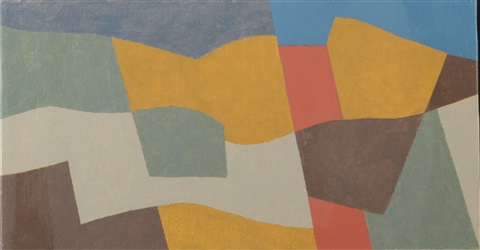
Narrow Landscape No.7 by George Dannatt
The Concise Oxford Dictionary’s definition of music is “Vocal or instrumental sounds (or both) combined
in such a way as to produce beauty of form, harmony and expression of emotion”.
My own definition of music (Project One, Part One What music means?) is: “music is a unique language and it connects people all around the world. It can be written without any limitation, so it is a perfect tool to express emotion, creativity or using it for healing”. : (McCaul, 2019)
Cage approach to music by incorporating unconventional
instrumentation affect the sound is produced and his formal structure is in
terms of units of time rather than pitch and rhythmic relationships. He uses
various objects (pennies, bolts, rubber etc) and random volumes, durations and
speed.
Beauty is a subjective term and open to interpretation, but
taken in its widest definition, some people will find these works beautiful.
All three pieces had form, harmonic content and expressed emotion. So given
this definition, I believe these works may be considered to be music.
Post war musicians often demanded more attentive
listening from their audiences. The same attention required from composers in
classical music by evoking of impressions, thoughts and feelings. In chance
music, some elements are left unspecified, use more improvisation, experiencing
each sound as it comes along. It does not convey any emotion or other
intention. Although all the elements of music are there, I think it is
also an artwork. It deliberately created to have aesthetic value. The composer
may perceive his work as an art, but other people may have different view about
the composition and it not necessarily fulfilling the definition of art.
Based on the chance and serial music that I have listened
to, there seems to be a greater focus on rhythm in chance music, with melody
virtually absent at times. Chance music has no defined musical structure
whereas serialism is based on some traditional musical elements.
At this stage of this course, I would simply be listening to
music without considering its composition system used. I think it is not
essential for understanding the work at an emotional level but such an
understanding my increase the intellectual appreciation from the listener.
It is possible to gain emotional impact from music without
understanding the underlying compositional process used. On the other hand,
understanding the music on the intellectual level creates a deeper emotional
impact.
A good example is the film music., where music contributes
to the overall emotional impact of the story, at times without even being
consciously noticed by the viewer. Another example is the church music. On the
Mass the music contributes to the emotional climax of the service. Not too many
people of the congregation would have understood the compositional process.
Emotion is created in music through the manipulation of
musical elements such as rhythm, tempo, harmony, melody, dynamics and timbre. Associations
between musical features and emotions differ among individuals. Some of the
effects are the creation and release of tension through the manipulation of
dissonance and consonance, the sadness which created by minor chords, the
ethereal emotions which created by augmented chords, and the speed and loudness
to create the sense of urgency and importance. I think chance music also create
emotional impact. It would be also interesting to see if the music would bring
out the same emotional responses from people whose cultures unexposed to
western music.
Both chance and serial music created new rules that avoided the tonal structure. Serialism has an identified music structure compared to chance music. Chance music uses unconventional instrumental and it is different each time of performance. The fact that the performance is left in the hands of the performer and random selection of rhythm and pitches applied is distracting the music.


 Aname
Aname 